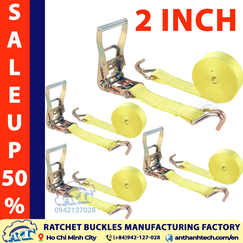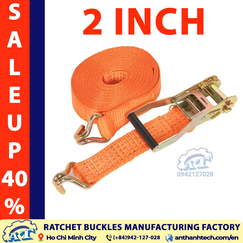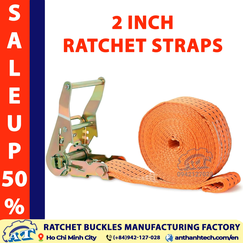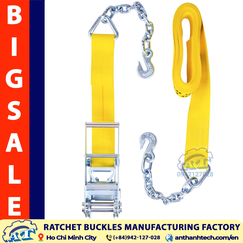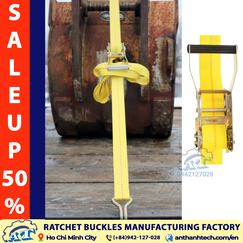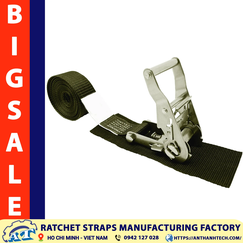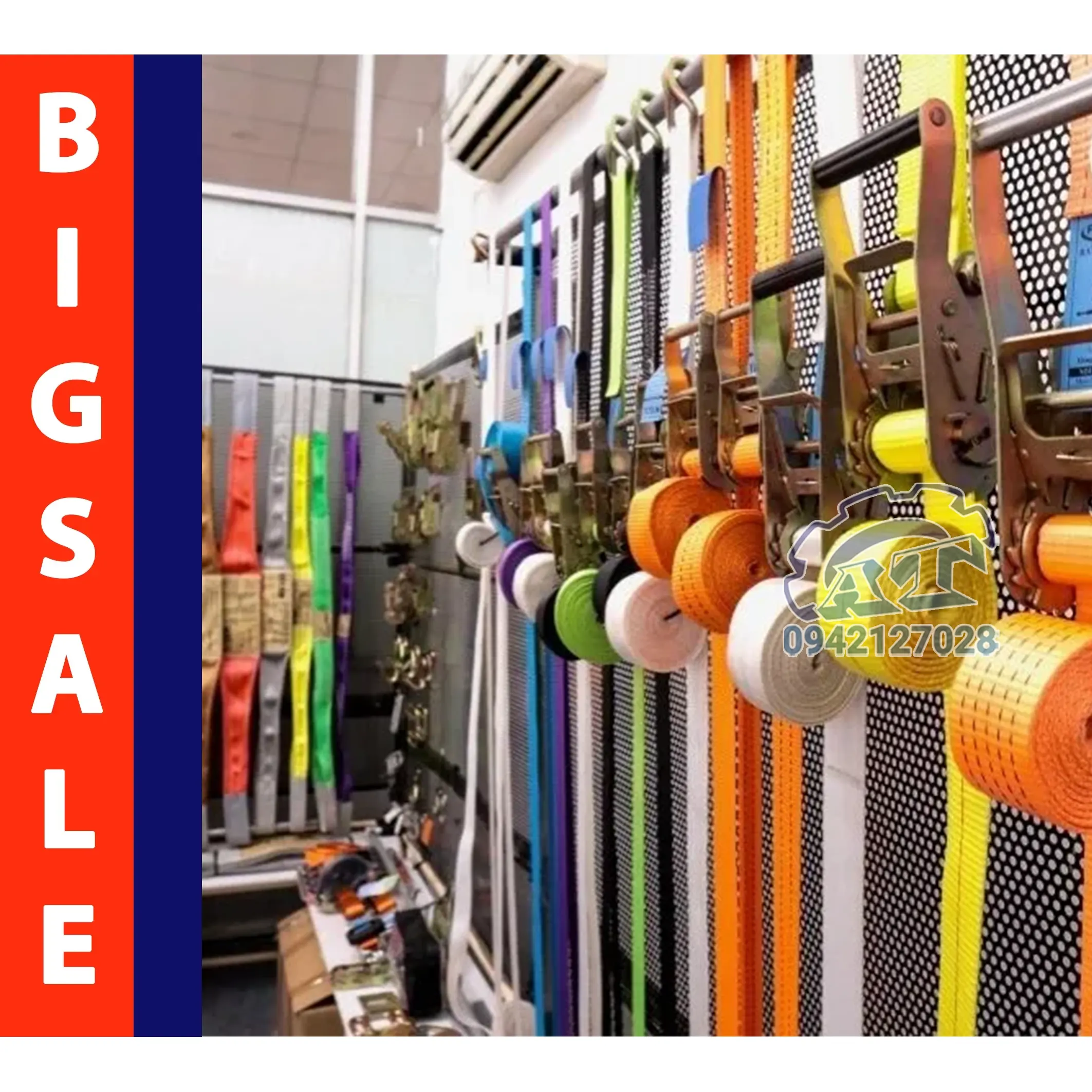
Leading Manufacturer of Ratchet Straps and Buckles in Asia | An Thanh Tech
When it comes to global logistics, supply chain efficiency, and cargo control, fleet safety is the highest priority. Ratchet straps (internationally referred to as tie-down straps, lashing straps, or cargo tie-downs) serve as the industrial baseline for securing payloads across transport networks.
Whether you are anchoring heavy equipment on an international flatbed trailer or stabilizing high-volume pallets inside an ocean freight container, selecting and operating the correct lashing equipment is a critical operational safety requirement.
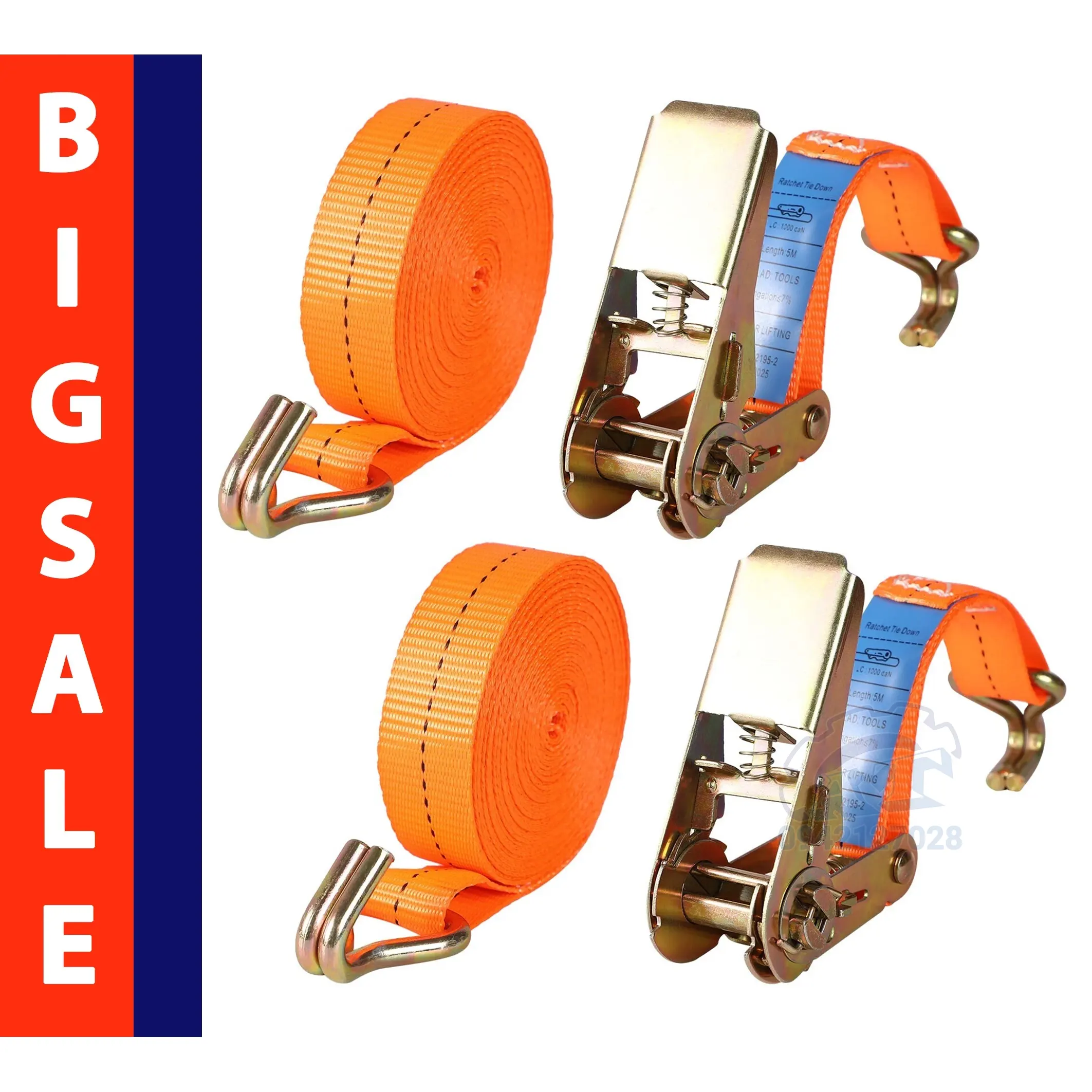
(Ratchet Strap)
1. What is a Ratchet Strap?
A ratchet strap is a heavy-duty mechanical fastening assembly consisting of a high-tensile webbed strap and an integrated gear-and-pawl tensioning mechanism. It is engineered to bind, anchor, and tightly secure heavy goods on flatbeds, trailers, commercial trucks, or within warehouse storage racking systems.
Manufactured from 100% high-tenacity polyester (PES) webbing and zinc-plated or stainless steel end hardware (such as Double J-hooks, S-hooks, or Flat hooks), these tie-down assemblies handle working load capacities ranging from 250 kg (approx. 550 lbs) up to 10 tons (22,000 lbs) depending on the strap width, weaving density, and hardware grade.
Anatomy of a Heavy-Duty Ratchet Strap
A professional-grade cargo lashing system consists of three structural components:
-
High-Tenacity Polyester Webbing: Woven tightly to ensure extreme abrasion resistance, minimal elongation (stretch) under load, native moisture resistance to prevent rot/mildew, and UV protection for outdoor environments.
-
Ratchet Buckle Tensioner: The core mechanical component made from high-strength carbon steel. It utilizes a rotating sprocket mandrel and a locking spring-loaded catch to incrementalize and hold massive tension.
-
End Fittings (Hooks): Heavy-duty hooks (Double J, Flat, S, or E-Track clips) attached to the fixed and adjustable ends of the strap assembly to lock directly into vehicle anchor points or D-rings.
Anatomy of a Heavy-Duty Ratchet Strap
See more: Common types of hooks that come with cargo straps
2. Crucial Safety Metrics: WLL vs. Break Strength (BS)
To comply with international Department of Transportation (DOT) laws and global occupational safety mandates, operators must understand the mathematical engineering behind load calculation. Never mistake Break Strength for safe payload capacity.
International cargo standards enforce a strict 3:1 Safety Factor for woven tie-down straps:
-
Break Strength (BS): The maximum force/weight a brand-new strap assembly can withstand in a destructive laboratory tensile test before any component breaks or fails.
-
Working Load Limit (WLL): The maximum safe weight a strap can legally secure under normal operating conditions.
The industrial safety formula is strictly applied as follows:
WLL = Safety Enforcement/3
⚠️ Safety Enforcement: If a heavy-duty tie-down strap features a stamped Break Strength of 15,000 lbs (approx. 6.8 Tons), its legal Working Load Limit (WLL) is strictly capped at 5,000 lbs (approx. 2.26 Tons). Fleet managers must calculate total payload weights using the WLL rating exclusively.
3. Industrial Classifications of Cargo Lashing Straps
To safely match a cargo profile with the correct tie-down, assemblies are categorized by three main technical criteria:
By Webbing Width & Capacity
-
25mm (1 inch): Lightweight tie-downs rated for utility trailers, motorcycle hauling, and light roof racks.
-
38mm (1.5 inches): Medium-duty straps designed for commercial vans, box trucks, and light agricultural transport.
-
50mm (2 inches): The commercial transport standard. Used universally on flatbeds and container freight for securing pallets, heavy construction materials, and crates.
-
75mm (3 inches) & 100mm (4 inches): Heavy industrial or recovery tie-downs built for heavy equipment, steel coils, and military logistics.
By End Fitting Type
-
Double J-Hooks: Universal wire hooks that attach easily to side rails, D-rings, and structural steel lips.
-
Flat Hooks: Wide, flat steel stampings engineered specifically to slide over the outer rub rails of flatbed trailers.
-
S-Hooks: Closed or semi-closed hooks optimized for pickup trucks, utility rings, and power sports transport.
-
E-Track / L-Track Fittings: Specialized spring-loaded clips that snap directly into interior logistics tracking rails inside dry vans and refrigerated containers.
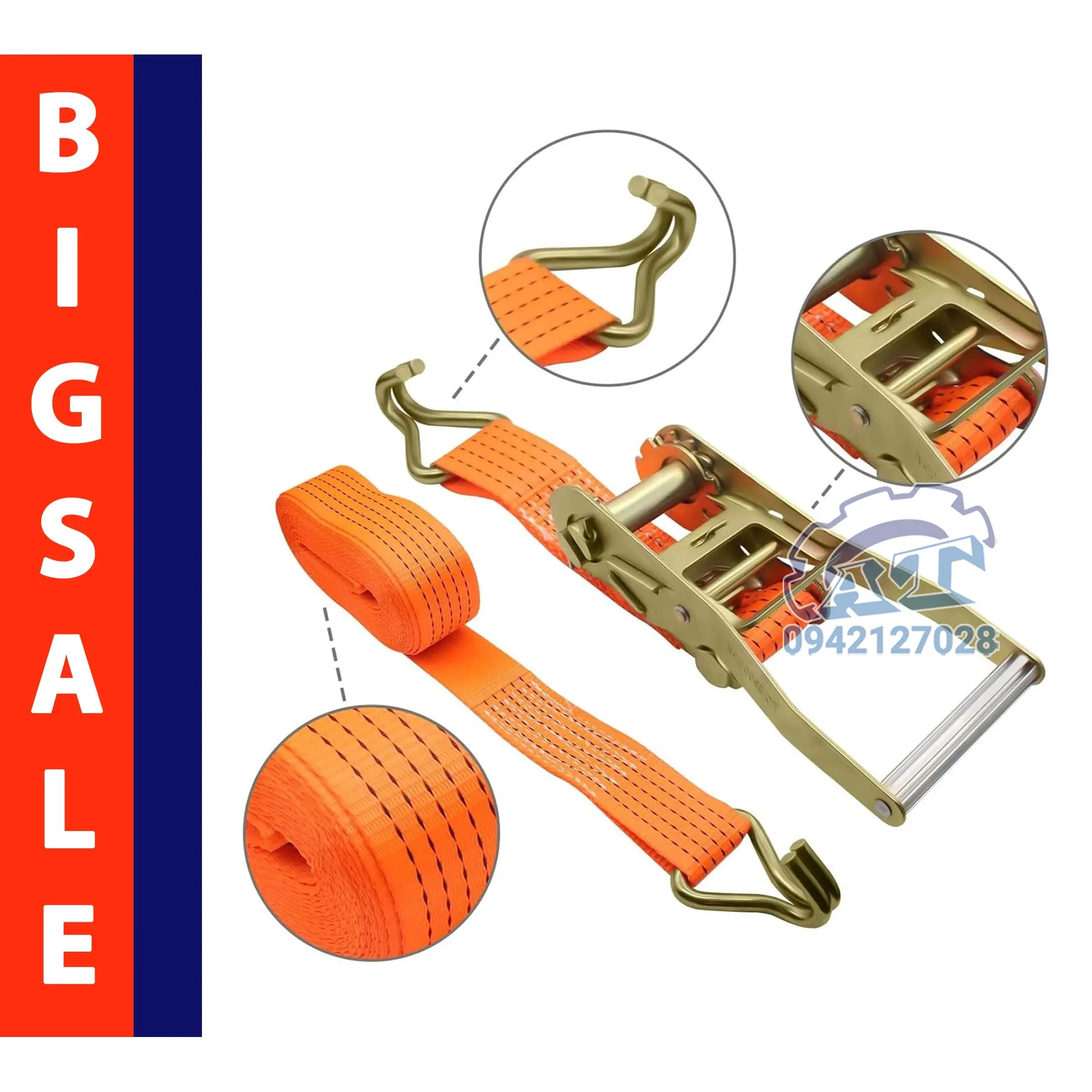
Structure of Lashing Strap
4. Advantages and Limitations of Ratchet Tie-Downs
Key Advantages
-
Dynamic Load Stability: The locking tooth mechanism ensures zero slack, preventing cargo from shifting, tipping, or causing vehicular imbalance over rough terrain.
-
High-Volume Efficiency: The ratcheting lever action allows a single operator to quickly tension massive loads without relying on complex, manual knot-tying techniques.
-
Extreme Material Resilience: High-tensile polyester webbing withstands chemical exposure, acidic environments, extreme sub-zero weather, and intense heat without degrading.
Limitations
-
Higher initial upfront capital investment compared to low-capacity cam buckle straps or standard utility ropes.
-
Requires basic training on proper mandrel winding to prevent binding, jammed gears, or premature webbing cuts caused by improper structural alignment.
5. Step-by-Step Guide: How to Safely Operate a Ratchet Strap
Following proper operational procedures prevents mechanical damage and maximizes tie-down lifespan:
-
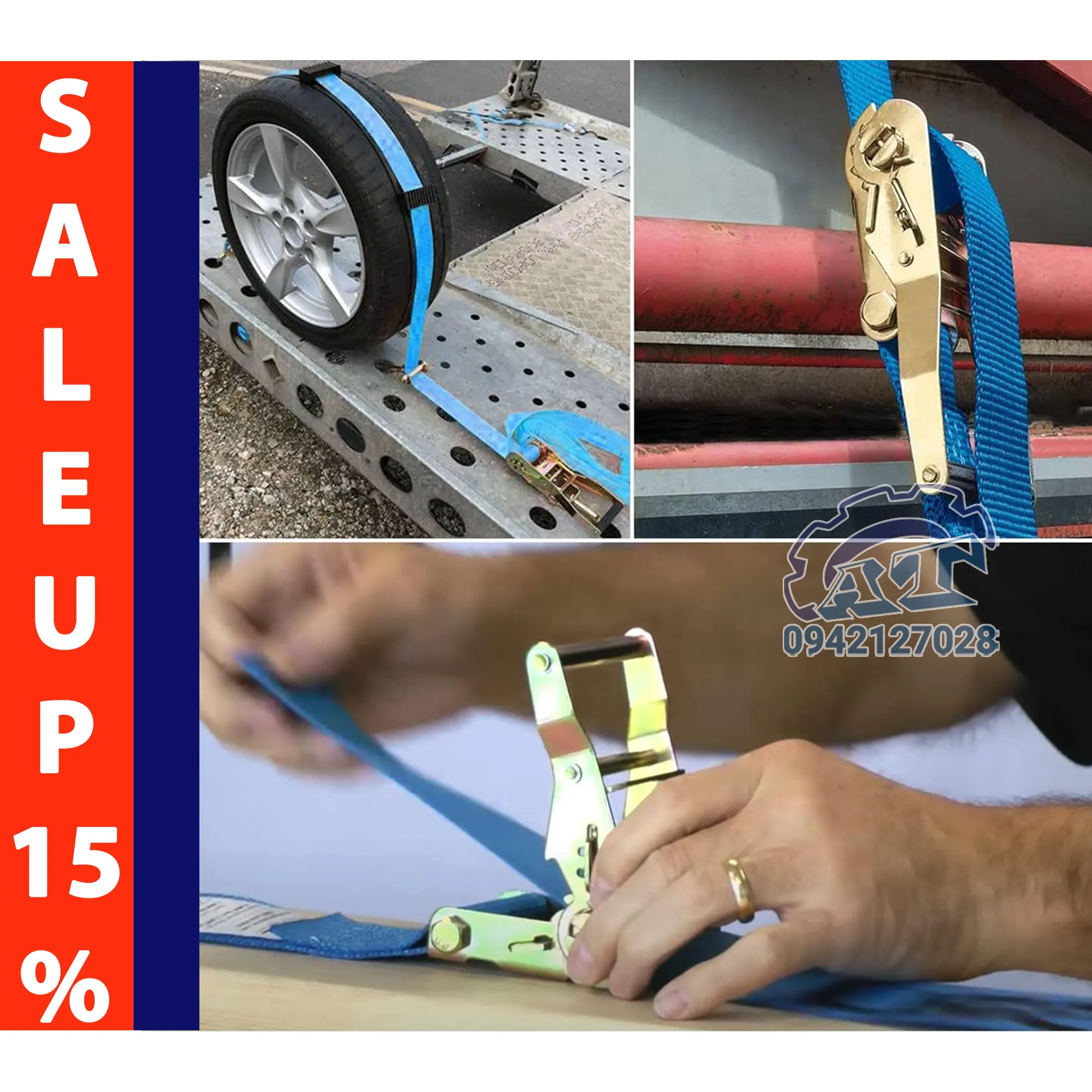
Step 1 (Open): Pull the spring-loaded release handle inside the ratchet frame and open the main lever completely (180 degrees) until the open slot in the center rotating mandrel faces upward.

Step 1: Loosen the ratchet buckle
-
Step 2 (Thread): Feed the loose end of the long polyester strap through the bottom of the mandrel slot, pull it out the other side, and take up the slack until the strap runs relatively flat over your cargo.

Pass the wire through the Ratchet shaft
-
Step 3 (Anchor): Connect the end fittings (hooks) to approved, structural vehicle tie-down anchor points. Ensure the webbing is not twisted or rolled.

Hook the fixed J end to the object to be tied
-
Step 4 (Tension): Pump the ratchet handle up and down. The internal sprocket will wind the webbing around the mandrel. Once the load is completely tight, push the handle completely flat to engage the primary safety lock.

Rotate the shaft + fold the lock
-
Step 5 (Release): To unlash, pull the inner release bar to bypass the locking teeth, swing the handle open into a completely flat 180-degree position, and pull the long end of the webbing straight out of the mandrel.

Release shaft + remove wire
6. Industrial Inspection: When to Retire a Ratchet Strap
According to WSTDA-T-1 and EN 12195-2 safety guidelines, a cargo strap must be immediately pulled from service and destroyed if any of the following damage indicators are found during pre-trip inspection:
-
Structural Cuts or Fraying: Any localized rip, puncture, or edge-fraying that exceeds 10% of the original webbing width.
-
Chemical Degradation: Brittle, stiff, burnt, or severely discolored spots indicating exposure to battery acid, corrosive industrial solvents, or extreme heat.
-
Hardware Deformation: Bent ratchet handles, cracked mandrels, elongated hook throats, or severe rust pitting that prevents fluid mechanical movement.
-
Missing Identification Tags: If the manufacturer's durable blue/green label stating the rated capacity (WLL) is missing, torn off, or completely unreadable, the strap is legally non-compliant and will fail roadside commercial inspections.
7. Global Wholesale Price & Specification Matrix
Procurement Note: Factory pricing scales dynamically based on order volume, customized printing requirements, choice of hardware plating, and localized regional compliance labeling.
Below is an indicative industrial baseline price index for certified export-grade lashing assemblies (quoted in equivalent USD/VND metrics):
| Product/Capacity Specification | Webbing Width | Total Assembly Length | Rated Capacity (Max Load) | Reference Price (VND) | FOB Target Price (USD) |
| 1T Utility Ratchet Strap | 25mm | 1m | 1 Ton (2,200 lbs) | 59,000 | $2.40 |
| 1T Utility Ratchet Strap | 25mm | 3m | 1 Ton (2,200 lbs) | 67,000 | $2.70 |
| 1T Utility Ratchet Strap | 25mm | 6m | 1 Ton (2,200 lbs) | 80,000 | $3.25 |
| 2T Commercial Grade Strap | 35mm | 1m | 2 Tons (4,400 lbs) | 81,000 | $3.30 |
| 2T Commercial Grade Strap | 35mm | 3m | 2 Tons (4,400 lbs) | 95,000 | $3.85 |
| 2T Commercial Grade Strap | 35mm | 6m | 2 Tons (4,400 lbs) | 114,000 | $4.60 |
| 3T Heavy-Duty Logistics Strap | 35mm | 3m | 3 Tons (6,600 lbs) | 122,000 | $4.95 |
| 3T Heavy-Duty Logistics Strap | 35mm | 5m | 3 Tons (6,600 lbs) | 138,000 | $5.60 |
| 3T Heavy-Duty Logistics Strap | 35mm | 9m | 3 Tons (6,600 lbs) | 162,000 | $6.55 |
| 5T Industrial Flatbed Strap | 50mm | 2m | 5 Tons (11,000 lbs) | 190,000 | $7.70 |
| 5T Industrial Flatbed Strap | 50mm | 5m | 5 Tons (11,000 lbs) | 231,000 | $9.35 |
| 5T Industrial Flatbed Strap | 50mm | 10m | 5 Tons (11,000 lbs) | 298,000 | $12.10 |
| 10T Super-Duty Lashing Gear | 75mm | 4m | 10 Tons (22,000 lbs) | 680,000 | $27.50 |
| 10T Super-Duty Lashing Gear | 75mm | 8m | 10 Tons (22,000 lbs) | 769,000 | $31.15 |
| 10T Super-Duty Lashing Gear | 75mm | 25m | 10 Tons (22,000 lbs) | 1,655,000 | $67.00 |
See more:Heavy Duty Ratchet Buckles Manufacturer
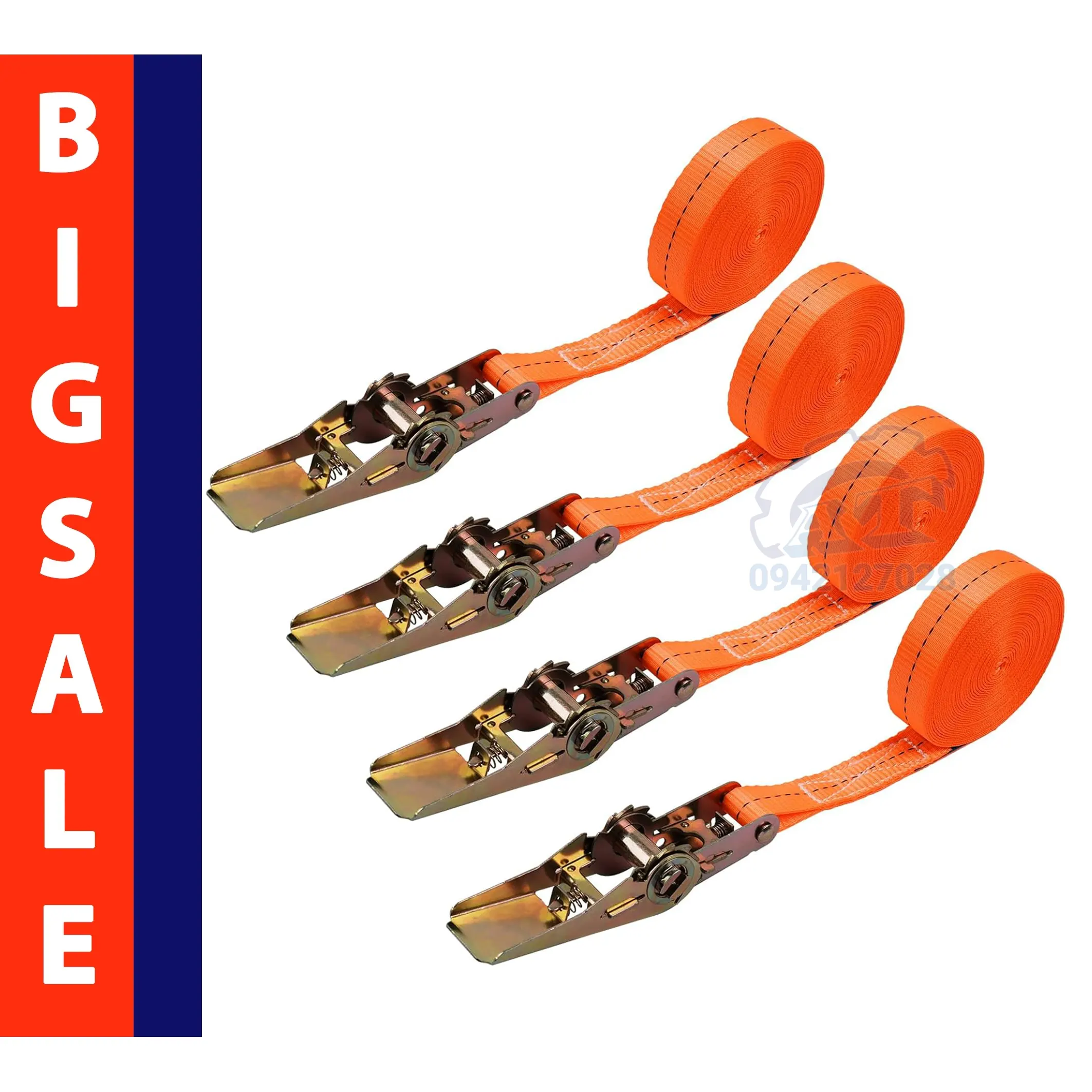
Ratchet straps with double j hooks
Certified OEM/ODM Ratchet Straps Manufacturer & Global Exporter
Are you a global hardware distributor, logistics procurement manager, or industrial brand looking to optimize your procurement pipeline with factory-direct sourcing?
Operating a fully integrated, state-of-the-art production facility in An Thanh Tech Vietnam, we specialize in manufacturing high-capacity cargo control hardware and heavy-duty tie-down systems engineered for international markets, including Japan, Europe, China, Taiwan, and Russia.
Why Partner With Us?
-
Total International Compliance: Every batch of export-grade straps is manufactured to meet or exceed WSTDA-T-1 (North American standard) and EN 12195-2 (European standard) requirements, featuring durable, color-coded regulatory capacity labels.
-
Destructive Testing Protocols: We conduct strict destructive pull testing on calibrated hydraulic machinery to verify exact Break Strength profiles before any container leaves our warehouse.
-
Custom OEM Capabilities: Full structural customization including targeted lengths, proprietary color matching, private white-labeling, custom brand stamping on metal buckles, and tailored end fittings.
-
Efficient Global Logistics: Strategic proximity to international shipping hubs ensures fast lead times, duty-optimized shipping, and streamlined customs clearances.
Contact our dedicated international sales and engineering team today for high-volume wholesale pricing, custom sampling, and container-load inquiries:
AN THANH TECHNICAL CO., LTD.
Address: 5 Vo Van Bich Street, Binh My Commune, Ho Chi Minh City, Vietnam
Hotline: 0942 127 028
Corporate Sales Email: cokhi.anthanhtech@gmail.com