

Cam Buckle Strap Maintenance: Care Guide
- 1. How a Cam Buckle Works
- How does a cam buckle hold the strap?
- Why is regular maintenance important?
- What can damage cam buckle straps?
- 2. Cam Buckle Maintenance in Four Steps
- Step 1: Inspect the buckle and webbing
- Step 2: Clean and dry the assembly
- Step 3: Lubricate only where permitted
- Step 4: Check operation before reuse
- 3. Common Cam Buckle Problems and What to Do
- Why does the strap slip through the buckle?
- What if the release lever sticks or fails to close?
- What should you do with frayed webbing?
- 4. How to Store Cam Buckle Straps
- Choose a clean, dry storage area
- Coil the straps without damaging the buckle
- Inspect stored straps before reuse
- 5. When Should You Replace a Cam Buckle Strap?
- Frequently Asked Questions
- How often should cam buckle straps be inspected?
- Can you wash cam buckle straps?
- Should you oil a cam buckle?
- Can worn cam buckle teeth be repaired?
- Does cleaning fix a slipping cam buckle strap?
- Cam Buckle Enquiries in Ho Chi Minh City, Vietnam
Dirt, moisture and worn parts can reduce a cam buckle’s grip. In this guide, An Thanh Tech, a cargo securing hardware manufacturer in Ho Chi Minh City, Vietnam, shares practical cam buckle strap maintenance tips, from cleaning and inspection to storage and replacement.
To maintain cam buckle straps, inspect the buckle and webbing before each use, remove dirt, allow all parts to dry and check that the cam closes correctly. Replace damaged components or strap assemblies according to the manufacturer’s instructions. Keep lubricant away from the webbing and gripping surfaces.
An Thanh, a cam buckle manufacturer in Ho Chi Minh City, Vietnam, shares practical tips on cam buckle maintenance, common problems and when to replace worn or damaged buckles.
1. How a Cam Buckle Works
How does a cam buckle hold the strap?
A cam buckle uses a spring-loaded, toothed cam to grip webbing. Pressing the release lever opens the cam so the strap can move through the buckle. Releasing it allows the cam to engage with the webbing and resist backward movement.
Correct threading, compatible webbing and an undamaged gripping mechanism are essential for reliable operation.
Why is regular maintenance important?
Regular inspection and cleaning help you:
-
Identify worn teeth, damaged springs and frayed webbing.
-
Remove debris that can interfere with the cam mechanism.
-
Keep the release lever moving freely.
-
Spot damage before the strap is used to secure cargo.
Maintenance supports reliable operation, but it cannot restore the strength of damaged hardware or webbing.
What can damage cam buckle straps?
Common causes include:
-
Moisture and salt: Can promote corrosion on susceptible metal parts.
-
Sand and dirt: Can obstruct moving parts and abrade the webbing.
-
Oil and grease: Can contaminate the gripping area.
-
Sunlight, heat and chemicals: Can degrade webbing.
-
Overloading and impact: Can deform the buckle or damage the strap.
2. Cam Buckle Maintenance in Four Steps
Step 1: Inspect the buckle and webbing
Release the tension and inspect the complete strap assembly before cleaning.
Check the buckle for cracks, bending, corrosion, worn teeth and loose or damaged parts. Press and release the lever to check that the cam moves freely and returns to its closed position.
Examine the webbing on both sides, particularly where it passes through the buckle and around attachment points. Look for cuts, fraying, burns, chemical damage and broken stitching.
Remove damaged equipment from service. Cleaning alone does not make it safe to reuse.
Step 2: Clean and dry the assembly
Use a soft brush to remove loose dirt from the buckle and cam opening. Where permitted by the manufacturer, clean with mild soap and water, rinse thoroughly and let the assembly dry completely.
Avoid aggressive chemicals, abrasive cleaning methods and direct heat. Do not pack wet straps into a closed container.
Step 3: Lubricate only where permitted
Follow the buckle manufacturer’s instructions before applying lubricant. If lubrication is specified, use the recommended product sparingly on the designated moving joints.
Keep lubricant away from the cam teeth, the webbing contact surface and the strap itself. Wipe away any excess.
If the mechanism remains stiff or does not close properly after approved cleaning and maintenance, remove it from service.
Step 4: Check operation before reuse
Thread compatible webbing through the buckle in the correct direction. Confirm that the release lever operates smoothly and the cam engages with the strap.
If the webbing slips, stop using the assembly and investigate the cause.
A manual function check can reveal obvious faults; it does not verify the rated capacity of the strap or replace a required inspection.
3. Common Cam Buckle Problems and What to Do
Why does the strap slip through the buckle?
Slippage can result from incorrect threading, incompatible webbing, contamination, worn cam teeth or a faulty mechanism.
Check the threading direction and confirm that the strap matches the buckle’s specified webbing requirements. Clean the assembly using the approved method.
If slipping continues, remove the assembly from service. Do not file or reshape worn cam teeth.
What if the release lever sticks or fails to close?
First, check for visible dirt or debris and clean according to the manufacturer’s instructions.
If the spring is broken, the cam does not return properly or corrosion affects movement, replace the buckle or assembly as specified by the manufacturer. Do not fit an improvised spring or pin.
What should you do with frayed webbing?
Remove damaged webbing from service and follow the manufacturer’s replacement criteria.
Do not burn frayed fibres, knot damaged sections or cut and rejoin load-bearing webbing as a repair. Inspect the buckle and surrounding contact points for sharp edges that may have caused the damage.
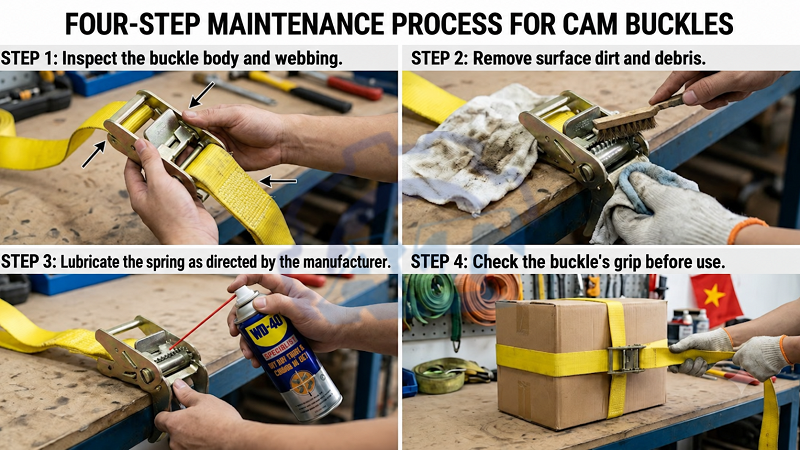
Four step cam buckle maintenance guide
4. How to Store Cam Buckle Straps
Choose a clean, dry storage area
Store straps in a dry, ventilated place away from direct sunlight, heat, chemicals and sharp objects.
For workshops, warehouses and transport operations exposed to humid conditions, allow straps to dry fully before putting them away.
Coil the straps without damaging the buckle
Coil the webbing loosely and keep the buckle protected from impact. Avoid placing heavy objects on the release lever or trapping the strap beneath equipment.
Keep usable straps separate from damaged items awaiting replacement.
Inspect stored straps before reuse
Check straps before returning them to service, even if they have been unused for some time.
Set additional inspection intervals according to the manufacturer’s instructions, storage conditions and frequency of use. Look for corrosion, contamination and changes in webbing condition.
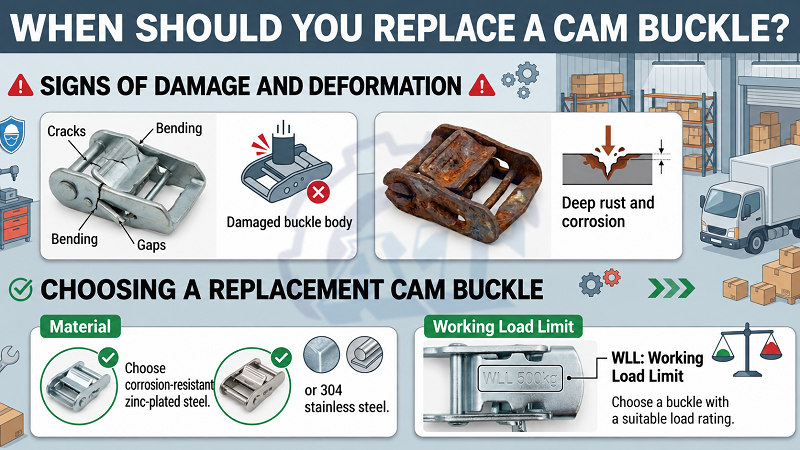
When to replace a cam buckle
5. When Should You Replace a Cam Buckle Strap?
Remove the buckle or complete assembly from service when you find:
-
A cracked, bent or broken buckle body.
-
Worn or damaged cam teeth that no longer grip reliably.
-
A broken spring or a release lever that fails to close.
-
Significant corrosion or damaged connecting parts.
-
Cut, torn, burnt or chemically damaged webbing.
-
Broken load-bearing stitching.
-
Persistent slipping after correct threading and approved cleaning.
If the rating or suitability of an assembly cannot be established, confirm its specification before use.
How do you choose a replacement?
Select a buckle that matches the webbing width, thickness and intended application. Check the material, finish and stated load rating, together with any assembly requirements.
Breaking strength is not the same as working load limit or lashing capacity. Use the rating applicable to the complete assembly and its intended securing method.
For purchasing enquiries, provide the strap dimensions, required quantity, operating environment and relevant load specifications.
Frequently Asked Questions
How often should cam buckle straps be inspected?
Inspect them before every use. Carry out additional checks after exposure to harsh conditions or any event that may have caused damage, following the manufacturer’s instructions.
Can you wash cam buckle straps?
Usually, mild soap and water are suitable where permitted by the manufacturer. Rinse thoroughly and air-dry completely before storage.
Should you oil a cam buckle?
Only if the manufacturer recommends it. Apply the specified lubricant to the designated moving parts and keep it off the webbing and gripping surfaces.
Can worn cam buckle teeth be repaired?
Do not file or reshape the teeth as a routine repair. Replace the affected buckle or strap assembly according to the manufacturer’s requirements.
Does cleaning fix a slipping cam buckle strap?
Cleaning may help if dirt is the cause. It will not correct worn teeth, damaged webbing, an unsuitable strap or a faulty spring.
Cam Buckle Enquiries in Ho Chi Minh City, Vietnam
An Thanh Tech mechanical manufacturing factory, located in Ho Chi Minh City, Vietnam, produces cam buckles and other cargo securing hardware for replacement, wholesale and OEM orders.
For product advice and a quotation, send us your webbing dimensions, buckle specifications, required quantity and intended application. These details help us recommend a suitable product and prepare an accurate quotation.
An Thanh Tech
Address: 5 Vo Van Bich Street, Binh My Commune, Ho Chi Minh City, Vietnam
Phone / WhatsApp / Zalo: +84 942 127 028
Email: cokhi.anthanhtech@gmail.com
Website: anthanhtech.com
Related News

15/10
2026
Match a ratchet buckle, webbing, and hooks across four criteria: webbing width, complete-assembly load rating (WLL/LC), operating environment, and anchor-point geometry. Pair the buckle to the webbing’s exact width and thickness, rate the assembly by its weakest link, and ensure hooks seat fully without tip loading.

15/10
2026
Understanding ratchet buckle load ratings is essential for safe cargo securement. This guide explains the difference between WLL (Working Load Limit), LC (Lashing Capacity) and breaking strength, shows how to read a ratchet strap label, and helps buyers select the correct ratchet buckle assembly for US, EU and Australian transport applications.

01/11
2026
Ratchet strap slipping or jamming? Learn how to thread, tighten and release a ratchet buckle correctly with practical safety guidance from An Thanh Tech, a cargo securing hardware manufacturer in Vietnam.

26/09
2026
Ever cranked down a cargo strap only to find it twisted, jammed, and losing tension on the highway?. A single twist in your lashing webbing isn't just annoying - it slashes your cargo's security by up to 25%. Here is why cargo straps twist when tightening, the hidden dangers of edge-load stress, and the proper 5-step technique to secure your freight flat, safe, and secure every single time.
View more