

How to Use a Ratchet Buckle Safely: A Step-by-Step Guide
- 1. What Is a Ratchet Buckle?
- 2. How to Use a Ratchet Buckle: Six Steps
- Step 1: Inspect the Buckle and Webbing
- Step 2: Attach the Hooks and Thread the Webbing
- Step 3: Remove Excess Slack
- Step 4: Tighten the Strap
- Step 5: Lock the Handle and Check the Assembly
- Step 6: Release and Remove the Strap
- 3. Essential Ratchet Buckle Safety Precautions
- Select the Correct Capacity and Webbing Size
- Avoid Common Operating Mistakes
- Clean and Store the Equipment Properly
- 4. How to Choose a Suitable Ratchet Buckle
- 5. Where to Buy Ratchet Buckles
- 6. Frequently Asked Questions
- Is a ratchet buckle difficult to use?
- Why is my ratchet buckle not tightening the strap?
- Can ratchet straps secure every type of cargo?
- When should a ratchet buckle be replaced?
- Secure Cargo with the Right Equipment and Technique
Ratchet strap slipping or jamming? Learn how to thread, tighten and release a ratchet buckle correctly with practical safety guidance from An Thanh Tech, a cargo securing hardware manufacturer in Vietnam.
Using a ratchet buckle correctly helps keep cargo secure and reduces the risk of strap slippage or load movement during transport. An Thanh Tech, a ratchet buckle factory in Ho Chi Minh City, Vietnam, explains how to inspect, thread, tighten and release a ratchet buckle, with essential safety precautions and product selection advice.
A ratchet buckle works as part of a complete cargo securing system. For safe operation, the buckle, webbing, end fittings and anchor points must be compatible and suitable for the intended application.
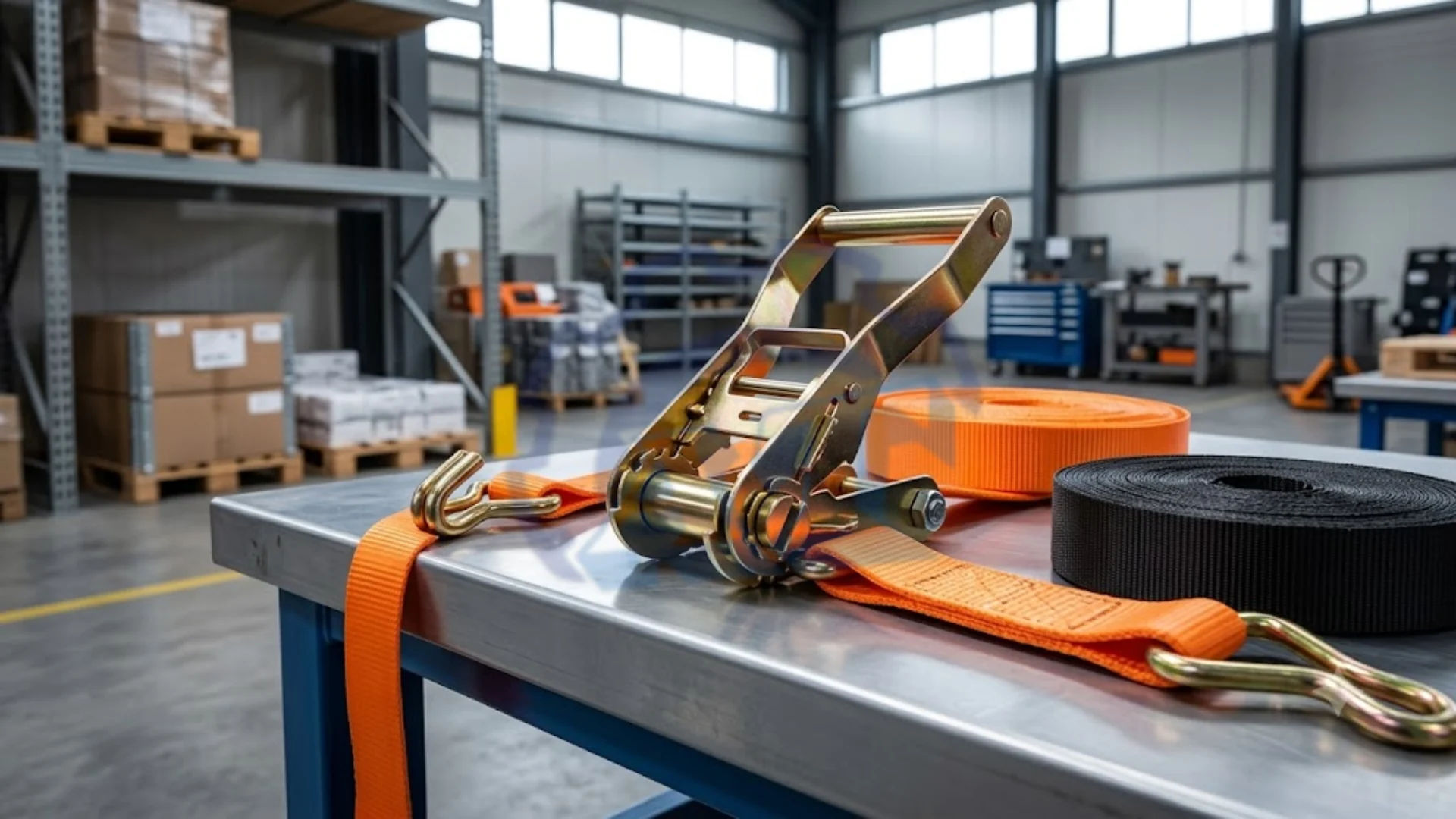
How to Use Ratchet Straps: Thread, Tighten & Release
1. What Is a Ratchet Buckle?
Function and Operating Principle
A ratchet buckle is a tensioning mechanism used to tighten and secure webbing around cargo. Commonly fitted to ratchet tie-down straps, it uses a handle, spindle and locking mechanism to take up the webbing and hold it under tension.
The mechanism allows the user to adjust strap tension. Its effectiveness depends on correct threading, proper locking and the suitability of the complete tie-down assembly.
Main Components
A typical ratchet buckle includes:
-
Handle: Operates the tensioning mechanism.
-
Ratchet wheels and locking pawls: Prevent the spindle from rotating backwards when properly engaged.
-
Webbing spindle: Holds and winds the webbing during tightening.
-
Release lever: Disengages the locking mechanism for opening and releasing the strap.
Depending on the assembly, the strap may also include J hooks, S hooks or other end fittings for attachment to suitable anchor points.
Understanding these components makes the buckle easier to operate and helps you identify damage before use.
Common Applications
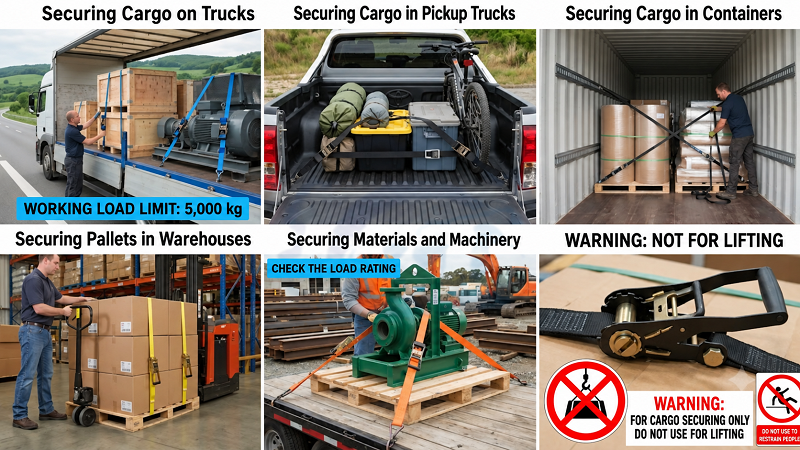
Ratchet buckles are widely used in cargo securing systems for trucks, pickup trucks, containers and warehouses. Suitable assemblies can secure pallets, materials and machinery within their specified ratings.
Cargo tie-down equipment must not be used for lifting loads or securing people. Always use equipment designed for the intended purpose.
2. How to Use a Ratchet Buckle: Six Steps
The following procedure covers common ratchet tie-down designs. Threading, handle movement and release operation may vary, so always follow the instructions supplied with your particular product.
Step 1: Inspect the Buckle and Webbing
Before use, check the handle, ratchet wheels, locking pawls and spindle. All components should move and engage correctly, with no cracks, distortion or significant corrosion.
Inspect the webbing for cuts, fraying, damaged stitching and signs of chemical damage.
Confirm that the webbing is compatible with the buckle and that the assembly’s rated capacity is suitable for the application. Do not use damaged equipment or an assembly whose required safety information cannot be identified.
Step 2: Attach the Hooks and Thread the Webbing
Position the ratchet where it can be operated safely. Attach the end fittings to suitable anchor points, ensuring that they are correctly seated.
Open the ratchet as instructed by the manufacturer. Feed the free end of the webbing through the spindle slot in the specified direction.
Keep the webbing flat and free from twists or folds. Pull it through the spindle so it is ready for tensioning.
Incorrect threading can prevent the mechanism from taking up the webbing or holding tension properly.
Step 3: Remove Excess Slack
Pull the loose end of the webbing by hand to remove excess slack before operating the handle.
Check that the strap is positioned correctly and that tightening will not destabilise or damage the load.
Use suitable edge protection wherever the webbing passes over sharp or abrasive surfaces. Avoid routing the strap through areas where it may be cut, pinched or worn during transport.
Step 4: Tighten the Strap
Move the handle through its operating stroke to wind the webbing onto the spindle and increase tension.
Operate the mechanism steadily while checking the strap position and load stability. Follow the manufacturer’s requirements for webbing wraps and tension.
Do not overtighten. Excessive tension can damage the webbing, buckle, anchor points or cargo.
Never use an extension pipe or improvised tool to apply extra force to the handle.
Step 5: Lock the Handle and Check the Assembly
Once the required tension is reached, move the handle fully into its locked position according to the manufacturer’s instructions.
Check that:
-
The locking mechanism is fully engaged.
-
The webbing is lying flat and held securely.
-
Hooks and other end fittings remain correctly seated.
-
Anchor points are secure.
-
Loose strap ends are secured away from wheels and moving parts.
Inspect the complete cargo securing arrangement before departure. Recheck it after the load has settled and during the journey, particularly on long trips or rough roads.
Step 6: Release and Remove the Strap
Before releasing tension, check whether the cargo could shift or fall. Provide additional support or restraint where necessary.
Stand clear of the potential recoil path. Operate the release lever and open the handle as directed by the manufacturer. Be prepared for tension to release suddenly.
Once the webbing is slack, pull it out of the spindle and detach the end fittings.
Do not force a jammed mechanism or jerk a strap that is still under tension.
3. Essential Ratchet Buckle Safety Precautions
Select the Correct Capacity and Webbing Size
Choose the assembly according to its stated capacity, webbing dimensions, cargo characteristics and securing arrangement.
The performance of the system depends on all its components, including the webbing, buckle, hooks and anchor points.
Breaking strength is not an allowable working load. Use the capacity stated on the product label and documentation for the intended application. Never estimate safe capacity from buckle size alone.
Avoid Common Operating Mistakes
Common mistakes include:
-
Threading the webbing incorrectly.
-
Allowing the strap to twist or fold.
-
Failing to close and lock the handle fully.
-
Applying excessive tension.
-
Using damaged webbing or hardware.
-
Attaching hooks to unsuitable anchor points.
Inspect the equipment before every use. Stop using the assembly if the mechanism jams, slips or shows signs of deformation.
Clean and Store the Equipment Properly
Remove dirt after use and allow the equipment to dry before storage. Store it in a dry location away from chemicals and corrosive conditions.
Regularly inspect the ratchet mechanism and webbing. Remove equipment from service if you find cracks, distortion, severe corrosion or a faulty locking or release mechanism.
Proper storage and routine inspection help maintain reliable operation and reduce avoidable replacement costs.
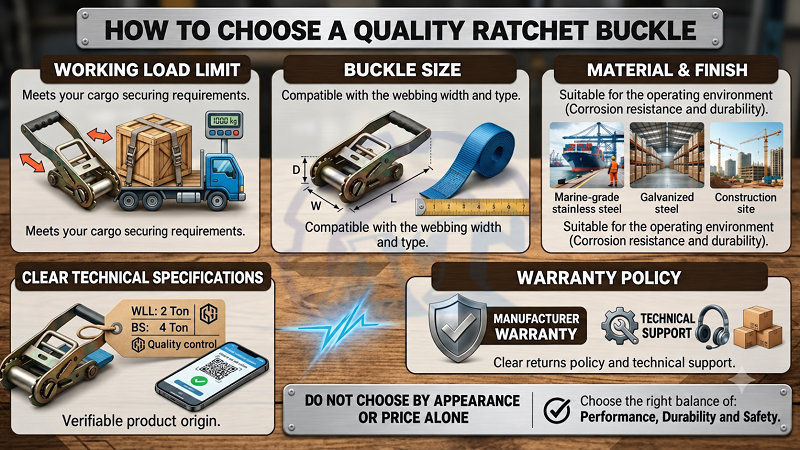
4. How to Choose a Suitable Ratchet Buckle
Types and Materials
Ratchet buckles are available in different sizes, designs and materials to suit different webbing and cargo securing requirements.
Common material options include plated steel and stainless steel. Selection should account for the operating environment, corrosion resistance, rated capacity and compatibility with the webbing.
A larger buckle does not automatically make an assembly suitable for a particular load. Always check the product specifications.
Key Purchasing Criteria
When comparing products, look for:
-
A stated capacity suitable for the application.
-
Compatibility with the webbing width, thickness and type.
-
Materials and finishes appropriate for the environment.
-
Clear specifications and traceable product information.
-
Operating instructions and technical support.
-
Clearly stated warranty and return terms, where offered.
Appearance and price alone are not enough to determine whether a buckle is suitable.
What Affects Ratchet Buckle Pricing?
Pricing depends on size, rated capacity, material, finish and manufacturing requirements. Order quantity, shipping and any additional inspection or documentation requirements may also affect the total cost.
Compare products with equivalent specifications. For bulk orders, request a quotation that clearly identifies the model, quantity and delivery requirements.
5. Where to Buy Ratchet Buckles
Choosing a Supplier
Choose a cargo securing hardware supplier that can provide clear product specifications and help confirm compatibility with your intended assembly.
Before ordering, ask for details of the buckle dimensions, material, finish, stated capacity and operating instructions. Confirm any required testing or documentation for the specific product.
For transport, warehousing or manufacturing applications, share information about the cargo, operating conditions and proposed securing arrangement.
Ratchet Buckle Enquiries in Vietnam
An Thanh Tech provides mechanical manufacturing services in Ho Chi Minh City, Vietnam, producing ratchet buckles and other cargo securing hardware.
For replacement, wholesale or custom manufacturing enquiries, send your webbing dimensions, buckle specifications, required quantity and application details. Include drawings or samples where available, along with any testing, marking or documentation requirements.
This information helps our team assess your needs and prepare a quotation tailored to your specifications.
Keeping Purchasing Costs Under Control
Define the required specifications before comparing prices. Consider shipping, inspection requirements and after-sales support as part of the total purchase cost.
For bulk orders, request itemised pricing by buckle model and quantity. If compatibility is uncertain, confirm the specifications before placing the order.
Selecting the correct product from the outset helps reduce replacement costs and assembly problems.
6. Frequently Asked Questions
Is a ratchet buckle difficult to use?
A ratchet buckle is straightforward to operate once you understand how to thread, tension, lock and release it. Read the product instructions and practise in a safe setting before using it to secure cargo.
Why is my ratchet buckle not tightening the strap?
Possible causes include incorrect threading, incompatible webbing, a release mechanism that has not returned to its operating position, or a jammed or damaged ratchet mechanism.
Check the threading and inspect the equipment. If the buckle still does not operate correctly, remove it from service for assessment or replacement.
Can ratchet straps secure every type of cargo?
No. Suitability depends on the cargo’s weight and shape, the available anchor points, the assembly rating and the securing arrangement.
Use equipment appropriate for the application. Cargo tie-down straps must not be used as lifting slings.
When should a ratchet buckle be replaced?
Remove the buckle from service if it is cracked, distorted, severely corroded or unable to lock and release correctly. Slipping ratchet teeth or unreliable pawl engagement also require immediate attention.
Damaged webbing, including cuts, significant fraying or broken stitching, must also be assessed and replaced as required.
Secure Cargo with the Right Equipment and Technique
Correct ratchet buckle operation begins with inspection and ends with a fully checked securing arrangement. Thread the webbing properly, apply suitable tension, lock the handle and release the assembly carefully.
Choose compatible components with clear specifications, and follow the manufacturer’s instructions throughout use.
An Thanh Tech
Address: 5 Vo Van Bich Street, Binh My Commune, Ho Chi Minh City, Vietnam
Phone / WhatsApp / Zalo: +84 942 127 028
Email: cokhi.anthanhtech@gmail.com
Related News

15/10
2026
Match a ratchet buckle, webbing, and hooks across four criteria: webbing width, complete-assembly load rating (WLL/LC), operating environment, and anchor-point geometry. Pair the buckle to the webbing’s exact width and thickness, rate the assembly by its weakest link, and ensure hooks seat fully without tip loading.

15/10
2026
Understanding ratchet buckle load ratings is essential for safe cargo securement. This guide explains the difference between WLL (Working Load Limit), LC (Lashing Capacity) and breaking strength, shows how to read a ratchet strap label, and helps buyers select the correct ratchet buckle assembly for US, EU and Australian transport applications.

01/11
2026
Dirt, moisture and worn parts can reduce a cam buckle’s grip. In this guide, An Thanh Tech, a cargo securing hardware manufacturer in Ho Chi Minh City, Vietnam, shares practical cam buckle strap maintenance tips, from cleaning and inspection to storage and replacement.

26/09
2026
Ever cranked down a cargo strap only to find it twisted, jammed, and losing tension on the highway?. A single twist in your lashing webbing isn't just annoying - it slashes your cargo's security by up to 25%. Here is why cargo straps twist when tightening, the hidden dangers of edge-load stress, and the proper 5-step technique to secure your freight flat, safe, and secure every single time.
View more