

How to Choose a Ratchet Buckle for 50mm Webbing – Complete B2B Buyer’s Guide (2026)
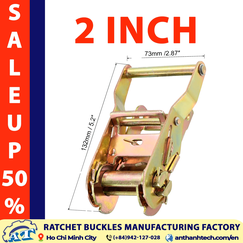
- Webbing Width Compatibility: Matching 50mm Straps to 2-Inch Buckles
- The Risks of Mismatched Tie-Down Hardware
- How to Verify 50mm Mandrel Specifications
- Common Width Pairing Mistakes to Avoid
- Load Capacity Ratings: WLL, LC, and Breaking Strength Explained
- Working Load Limit (WLL) vs. Breaking Strength (BS)
- Typical WLL Ranges for 2-Inch Ratchet Buckles
- How to Calculate Required WLL for Heavy-Duty Cargo
- Solving Strap Shredding for an EU Logistics Fleet
- Ratchet Handle Designs: Ergonomics for Cargo Control
- Long Wide Handle vs. Standard Profile Buckles
- When to Choose a Locking Ratchet Mechanism
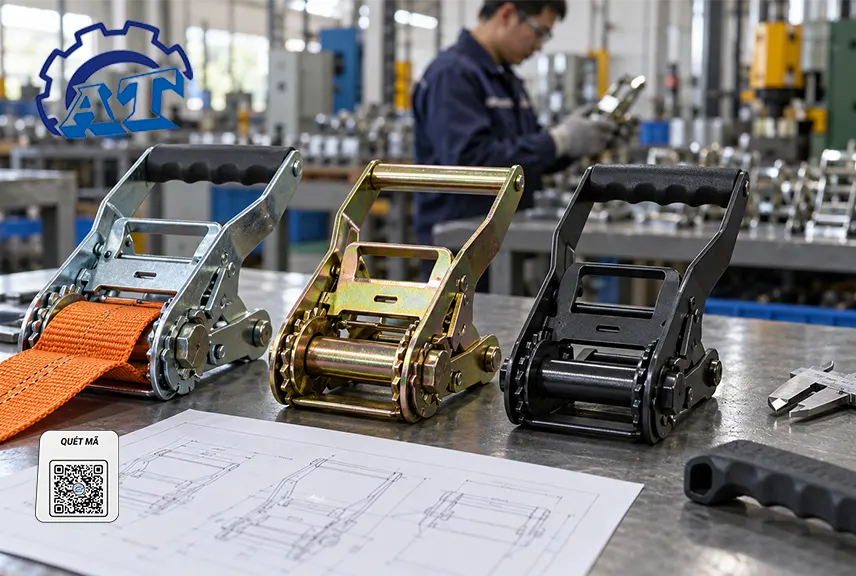
- Handle Material: Aluminum vs. Steel Durability
- Material & Finishes: Rust Prevention for Tie-Down Hardware
- International Safety Standards: EN 12195-2 & WSTDA Compliance
- Key Certification Standards for 50mm Hardware
- Mandatory LC and STF Markings on Buckles
- Why Certified Hardware Reduces B2B Liability
- B2B OEM & ODM Services for Custom Ratchet Buckles
- Custom Dimensions and Mounting Hardware
- Brand Protection: Logo Stamping and Custom Packaging
- Typical MOQ and Lead Times for Wholesale Orders
- Step-by-Step Guide: How to Thread 50mm Webbing into a Ratchet Buckle
- Hardware Maintenance: Extending the Life of Your Ratchet Buckles
- 1. Routine Inspection Checklist for Cargo Control Hardware
- 2. Cleaning and Storage Best Practices
- 3. When Must You Replace a 50mm Ratchet Buckle?
- FAQs About 50mm Ratchet Buckles for B2B Buyers
- Conclusion: Securing the Right 50mm Tie-Down Hardware
Heavy-duty 50mm (2-inch) webbing is only as safe as its ratchet buckle. The wrong hardware inevitably leads to strap abrasion or load failure. Learn how to select the correct 50mm buckle based on WLL, EN/WSTDA standards, and B2B OEM requirements.
Heavy-duty 50mm (2-inch) webbing is only as safe as its ratchet buckle. The wrong hardware inevitably leads to strap abrasion or load failure. In this guide by An Thanh Tech, learn how to select the correct 50mm buckle based on WLL, EN/WSTDA standards, and B2B OEM requirements.
Webbing Width Compatibility: Matching 50mm Straps to 2-Inch Buckles
The Risks of Mismatched Tie-Down Hardware
Ratchet buckles are engineered for exact webbing dimensions. Forcing a 50mm strap into a smaller buckle creates an eccentric fit. The mandrel cannot grip evenly, causing the webbing to twist and shred under high tension.
How to Verify 50mm Mandrel Specifications
Always check the "Webbing Width Compatibility" on the product datasheet. Because heavy-weave webbing is thicker, always request a physical sample to test the spool clearance before bulk ordering.
Common Width Pairing Mistakes to Avoid
-
The "tight fit": Forcing 50mm webbing into 45 - 48mm hardware.
-
The "looks sturdy" trap: Using narrower 25mm buckles for 50mm straps based purely on metal thickness.
Load Capacity Ratings: WLL, LC, and Breaking Strength Explained
Working Load Limit (WLL) vs. Breaking Strength (BS)
-
Breaking Strength (BS): The force at which a buckle physically snaps in laboratory testing.
-
Working Load Limit (WLL) / Lashing Capacity (LC): The maximum safe working load (typically 1/3 of the BS). Never select hardware based on Breaking Strength.
Typical WLL Ranges for 2-Inch Ratchet Buckles
-
Standard Transport: WLL 1,500–2,500 kg (1,500–2,500 daN).
-
Heavy-Duty Logistics: WLL 3,000–5,000 kg.
How to Calculate Required WLL for Heavy-Duty Cargo
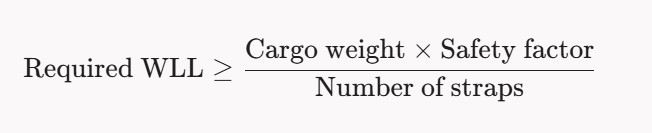
(Check EN 12195-2 or WSTDA for your region's mandatory safety factor).
Solving Strap Shredding for an EU Logistics Fleet
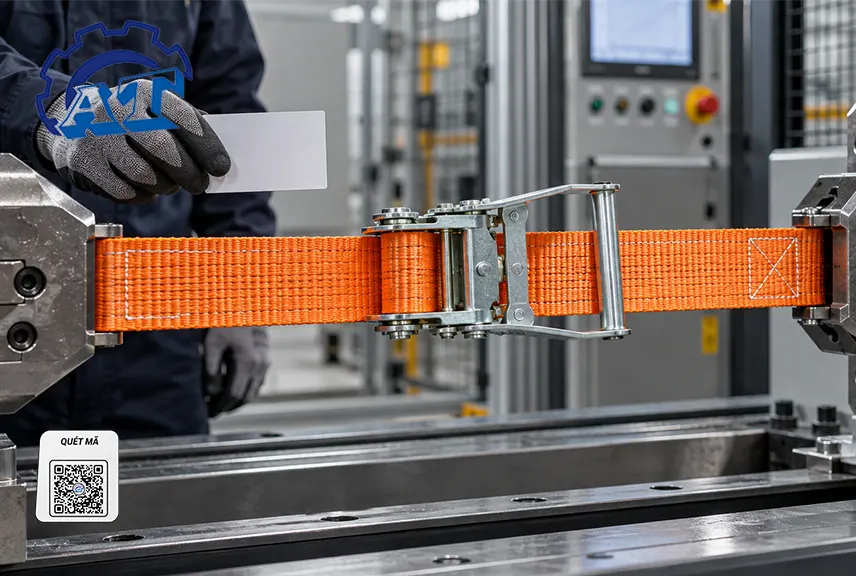
An EU flatbed transport company faced frequent mid-transit strap failures using standard 2,000kg buckles with thick, stiff webbing.
The Solution: We engineered a custom 50mm long-handle buckle with wider internal mandrel clearance and a 2,500kg WLL. The result: Zero webbing shredding incidents in 12 months and a 30% longer strap lifespan.
Ratchet Handle Designs: Ergonomics for Cargo Control
Long Wide Handle vs. Standard Profile Buckles
-
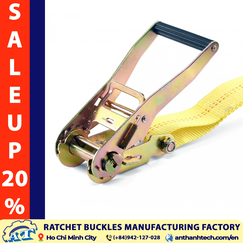
Long Wide Handle: Maximum leverage, easy to operate with heavy gloves. Ideal for high-frequency lashing.
-
Standard Handle: Low-profile design, perfect for tight spaces on smaller vehicles.
When to Choose a Locking Ratchet Mechanism
Locking buckles prevent accidental release if tensioning is paused midway. They are essential for high-vibration environments like flatbed trucks and heavy machinery transport.
Handle Material: Aluminum vs. Steel Durability
Aluminum is lightweight and naturally rust-resistant. Carbon steel handles handle extreme loads but require specialized zinc or galvanized coatings for outdoor survival.
Material & Finishes: Rust Prevention for Tie-Down Hardware
| Material & Finish | Best Environment | Characteristics |
| Carbon Steel + Zinc Plated | Transport, indoor | Cost-effective. Good resistance, but vulnerable to constant marine exposure. |
| Carbon Steel + Black Oxide | Theatrical, tactical | Sleek, anti-glare finish. Lower rust resistance than zinc. |
| Stainless Steel (304/316) | Marine, chemical | Ultimate corrosion resistance for saltwater and food-grade applications. |
Matching Buckle Coatings with Webbing and Hooks
A system is only as strong as its weakest link. Ensure your buckle, webbing treatment, and end hooks share identical environmental resistance ratings.
International Safety Standards: EN 12195-2 & WSTDA Compliance
Key Certification Standards for 50mm Hardware
-
EN 12195-2: The definitive EU standard for load restraint hardware.
-
WSTDA / CE / GS / TUV: Global marks of manufacturing consistency and safety.
Mandatory LC and STF Markings on Buckles
Compliant hardware must be permanently stamped with the LC (Lashing Capacity), STF (Standard Tension Force), manufacturer logo, and production year.
Why Certified Hardware Reduces B2B Liability
Using certified buckles is mandatory for customs clearance in the EU, US, and Australia, and drastically reduces your legal liability in the event of an accident.
B2B OEM & ODM Services for Custom Ratchet Buckles
Custom Dimensions and Mounting Hardware
Manufacturers can adjust handle lengths or drill custom mounting holes (e.g., 10mm bolt holes) to fit specific trailer configurations.
Brand Protection: Logo Stamping and Custom Packaging
Protect your brand identity by stamping your logo and part numbers directly onto the steel body.
Typical MOQ and Lead Times for Wholesale Orders
Reliable B2B suppliers typically require an MOQ of 1,000 - 5,000 pieces with lead times of 30 - 45 days. Always require an AQL inspection and physical samples before mass production.
B2B oem odm services for custom ratchet buckles
Step-by-Step Guide: How to Thread 50mm Webbing into a Ratchet Buckle
1. Thread the Webbing: Keep the strap straight and untwisted.
Open the ratchet handle fully. Feed the loose end of the 50mm strap from underneath through the slot in the center mandrel. Pull the slack through by hand.
2. Tension and Lock: Never exceed the WLL.
Pump the handle slowly. Check tension frequently to avoid crushing the cargo. Once secure, push the handle completely flat to engage the safety lock.
Dangerous Installation Errors to Avoid
Threading backward accelerates wear against sharp metal edges. Over-tensioning can bend the buckle frame and snap the webbing.
Hardware Maintenance: Extending the Life of Your Ratchet Buckles
1. Routine Inspection Checklist for Cargo Control Hardware
Inspect the metal frame for warping, deep rust, and cracks. Verify that the gear teeth and release mechanism operate smoothly.
2. Cleaning and Storage Best Practices
Rinse hardware with fresh water after exposure to road salt or ocean spray. Store in a dry environment away from corrosive chemicals.
3. When Must You Replace a 50mm Ratchet Buckle?
Replace immediately upon discovering cracks, warped frames, or jammed gears. Never weld or bend load-bearing hardware back into shape.
FAQs About 50mm Ratchet Buckles for B2B Buyers
1. Can I use a 45mm ratchet buckle for 50mm webbing?
No. The webbing will bunch up against the flanges, causing severe edge abrasion and a high risk of snapping under load.
2. What WLL do I need for a 2-ton cargo with 2 straps?
Using a standard safety factor of 2, the total required WLL is 4 tons. Each of the 2 straps must have a minimum WLL of 2 tons (2,000 kg).
3. Do 50mm ratchet buckles come with a locking mechanism?
Yes. High-vibration heavy-duty models feature built-in locks to prevent accidental release.
Conclusion: Securing the Right 50mm Tie-Down Hardware
Choosing the right buckle requires three steps: matching the exact 50mm width, verifying the WLL meets your payload, and selecting the right corrosion-resistant finish.
Ready to upgrade your lashing hardware? Contact our engineering team at 0942 127 028 or email us today for technical datasheets, compliance certificates, and physical OEM samples tailored to your project.
Related News

15/10
2026
Match a ratchet buckle, webbing, and hooks across four criteria: webbing width, complete-assembly load rating (WLL/LC), operating environment, and anchor-point geometry. Pair the buckle to the webbing’s exact width and thickness, rate the assembly by its weakest link, and ensure hooks seat fully without tip loading.

15/10
2026
Understanding ratchet buckle load ratings is essential for safe cargo securement. This guide explains the difference between WLL (Working Load Limit), LC (Lashing Capacity) and breaking strength, shows how to read a ratchet strap label, and helps buyers select the correct ratchet buckle assembly for US, EU and Australian transport applications.

24/09
2026
Got a jammed or rusted buckle but perfectly good webbing? Don't toss the whole assembly. Learning how to replace a ratchet buckle on a tie down strap saves money and ensures safety compliance. Follow our step-by-step 2026 guide to safely swap your damaged buckle in minutes.

24/09
2026
Choosing between 25mm and 50mm ratchet buckles isn't just about size - it defines your Working Load Limit (WLL), safety, and compliance. To prevent load failures and budget waste, this An Thanh Tech guide breaks down capacities, applications, and OEM standards for B2B buyers.
View more