

J Hook, U Hook vs S Hook: Features, Applications, and How to Choose the right One?
- 1. Overview of J Hooks, U Hooks, and S Hooks
- 2. Detailed Comparison of J Hooks, U Hooks, and S Hooks
- 2.1. Comparison of Shape and Design
- 2.2. Comparison of Load-Bearing Capacity
- 2.3. Comparison of Application Flexibility
- 2.4. Comparison of Applications
- 3. Advantages and Disadvantages of Each Hook Type
- 3.1. Advantages and Disadvantages of J Hooks
- 3.2. Advantages and Disadvantages of U Hooks
- 3.3. Advantages and Disadvantages of S Hooks
- 4. Important Considerations When Choosing J Hooks, U Hooks, and S Hooks
- 4.1. Identify the Intended Application
- 4.2. Check the Material of the Product
- 4.3. Pay Attention to the Safe Working Load (SWL)
- 4.4. Inspect the Product Before Use
- 5. Should You Choose J Hooks, U Hooks, or S Hooks?
- 5.1. Based on the Intended Application
- 5.2. Based on the Type of Cargo Lashing Strap
- 5.3. Based on the Anchor Point Configuration
- 6. Frequently Asked Questions About J Hooks, U Hooks, and S Hooks
- 7. Where to Buy Quality J Hooks, U Hooks, and S Hooks
- 8. Conclusion
In the field of cargo securing, transportation, and load restraint, J hooks, U hooks, and S hooks are among the most commonly used accessories. Each type of hook features a distinct design, construction, and range of applications, making it suitable for different operational requirements.
So, what are the differences between J hooks, U hooks, and S hooks? Which type offers the highest load-bearing capacity? And when should each type of hook be used?
1. Overview of J Hooks, U Hooks, and S Hooks
J hooks, U hooks, and S hooks are metal accessories featuring curved designs. They are commonly used for connecting, hanging, or securing various items across a wide range of industries.
Their names are primarily derived from their external shapes, which resemble the letters J, U, and S, respectively.
1.1. What Is a J Hook?
J hooks are heavy-duty metal accessories manufactured from carbon steel or alloy steel. They are specifically designed for use with ratchet tie-down straps and specialized cargo-securing cables.
Featuring a flexible J-shaped design, this hook allows users to anchor, tighten, and securely restrain large loads on trucks, trailers, and shipping containers.
Key Features of J Hooks:
- Designed with a shape resembling the letter J.
- Features a curved hook end for convenient attachment and secure connection.
- Available in various sizes and material specifications.
- Manufactured from carbon steel or alloy steel, depending on the intended application.
- Load capacity depends on the hook's design, material, dimensions, and manufacturing standards.
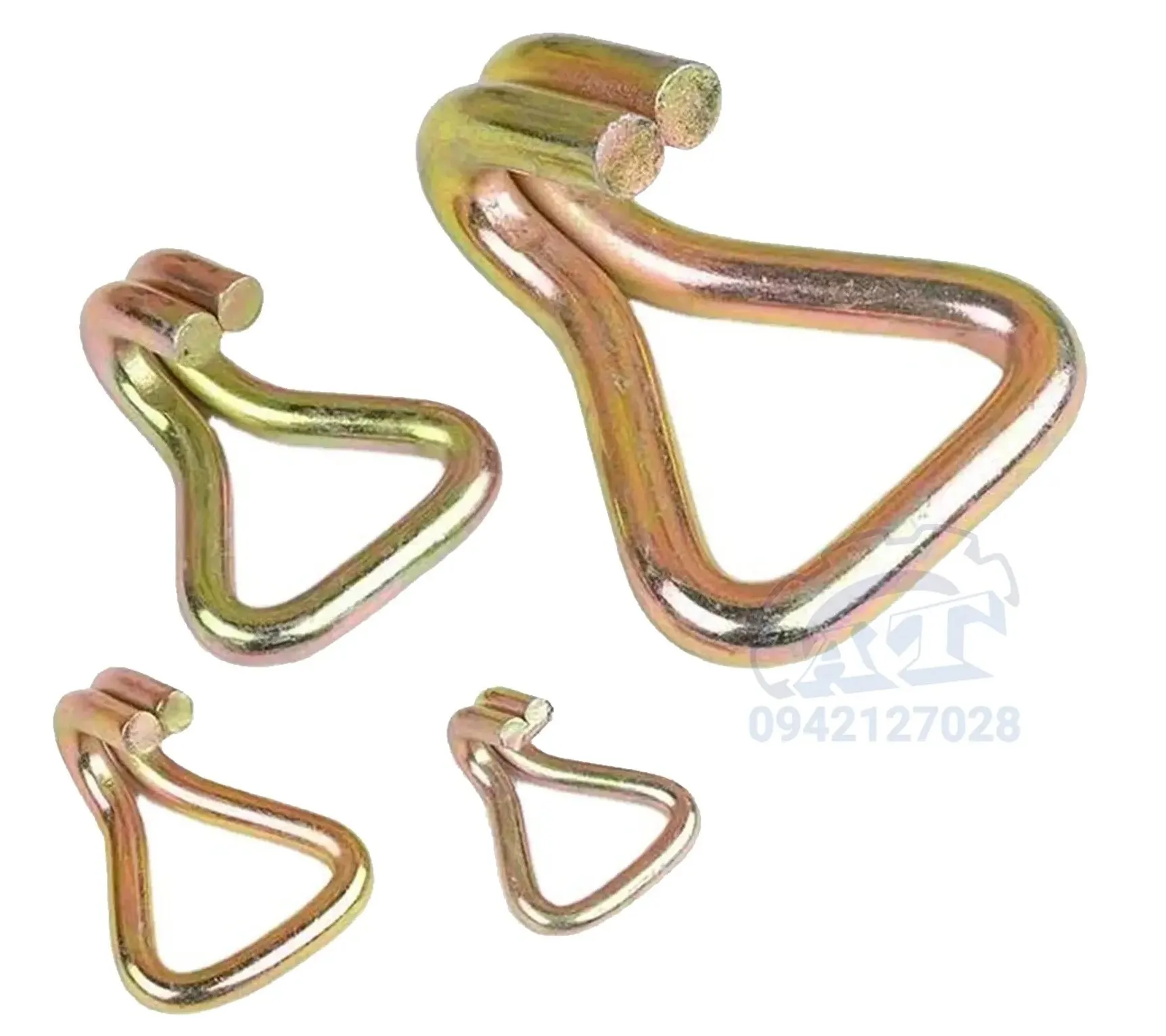
What is a J Hook?
1.2. What Is a U Hook?
U hooks are type of hooks featuring a shape similar to the letter U, with two symmetrical curved sides forming an open space in the middle. Depending on their design, a U hook may feature two open ends or incorporate additional locking mechanisms, pins, or other connecting components.
Key Features of U Hooks:
- Features a curved shape resembling the letter U.
- Consists of two arms forming an open space in the middle.
- Available in various designs depending on its intended function.
- Can be used for hanging, securing, and connecting applications.
- Load-bearing capacity depends on its structural design and the direction of the applied force.
*Note: Not all U hooks should be assumed to have the same load-bearing capacity or functional characteristics. Always verify the exact hook type and its technical specifications before use.
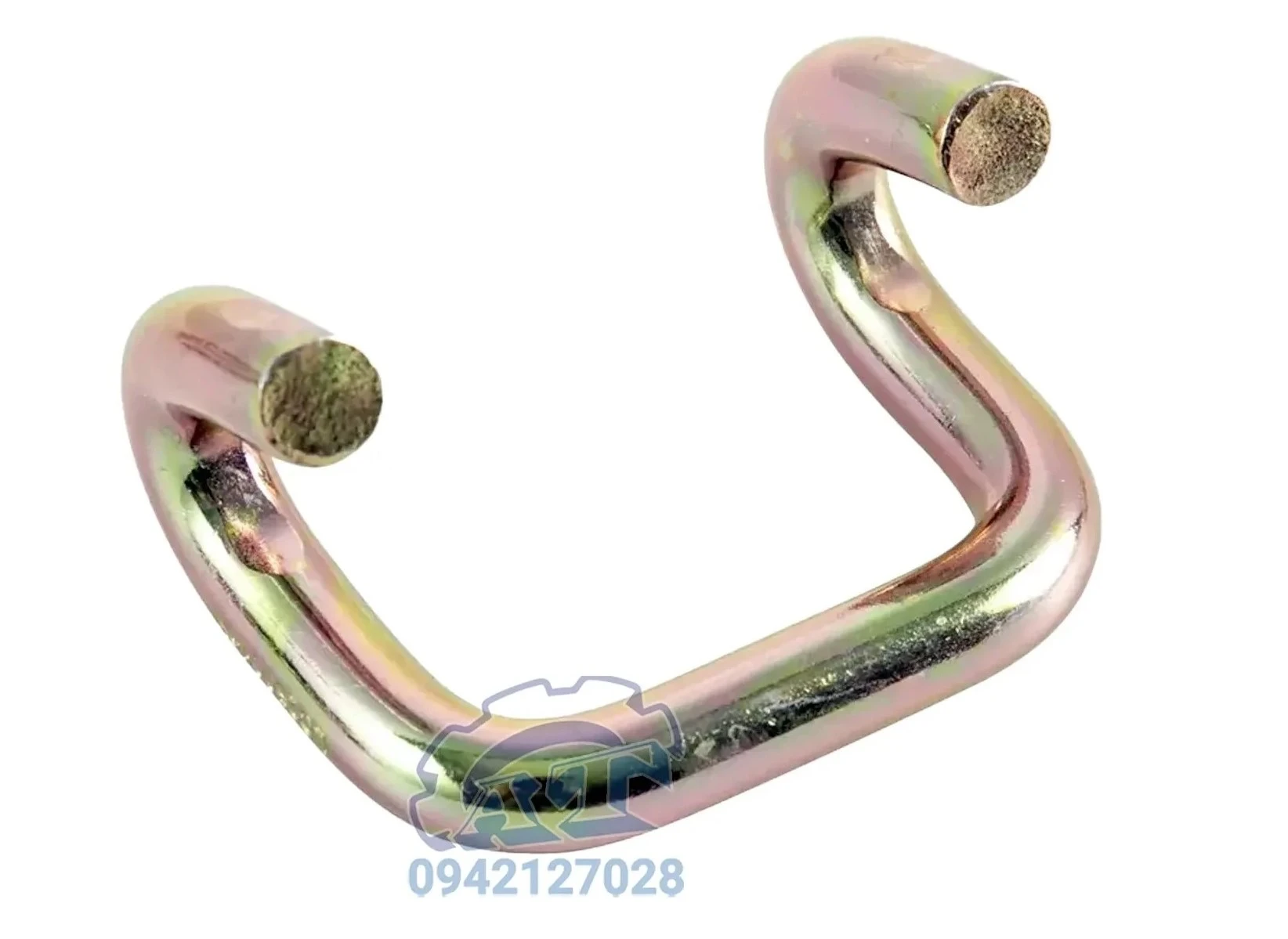
What is a U Hook?
1.3. What Is an S Hook?
S hooks are metal hooks featuring a shape similar to the letter S, with two curved ends facing opposite directions. One of their key characteristics is that both ends can be used to connect different objects or attachment points.
S hooks are commonly used in hanging applications, connecting accessories, and certain cargo-securing systems where their design is suitable for the intended application.
Key Features of S Hooks:
- Features a shape resembling the letter S.
- Has two curved ends facing opposite directions.
- Provides convenient connections between two separate attachment points.
- Available in various sizes, thicknesses, and material specifications.
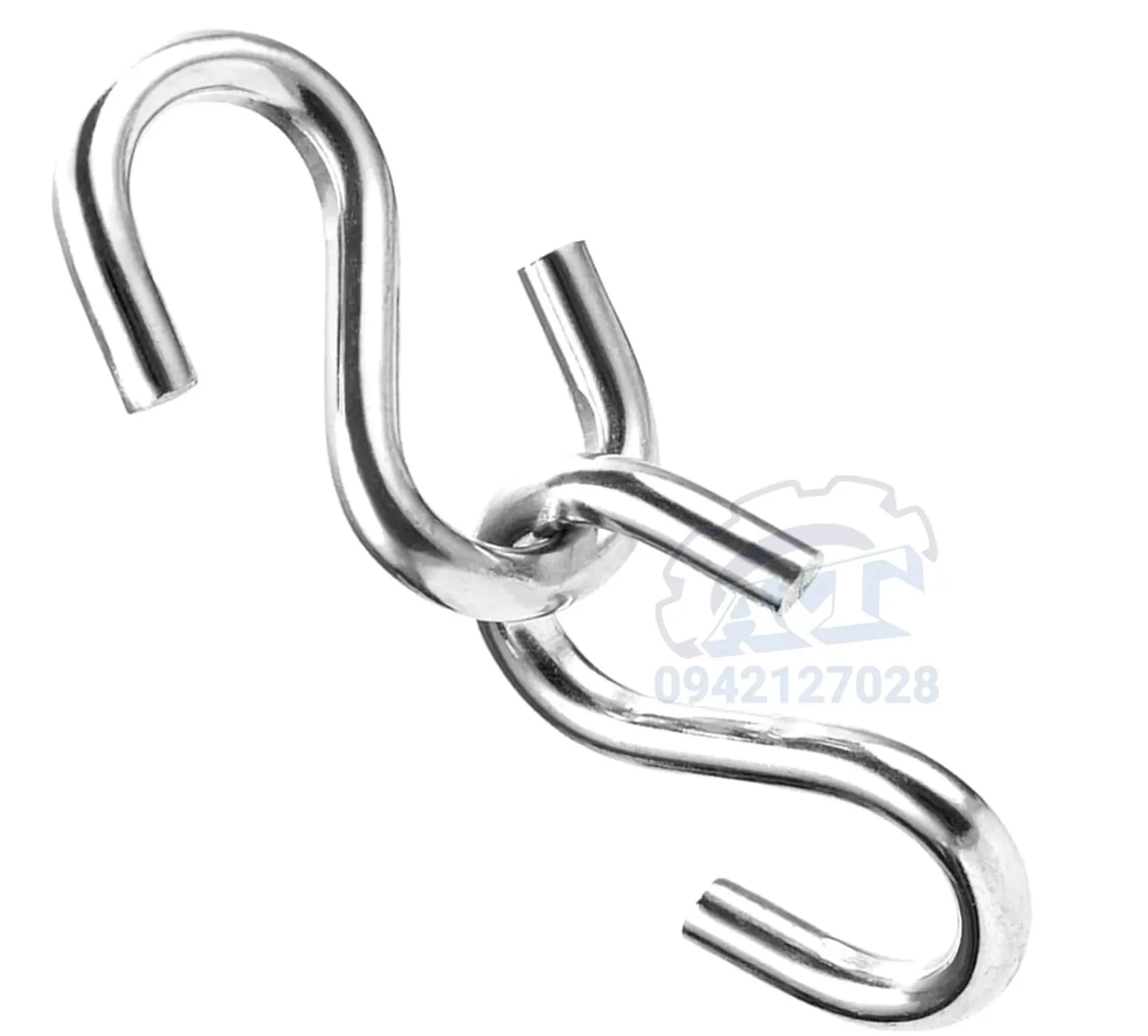
What is a S Hook?
2. Detailed Comparison of J Hooks, U Hooks, and S Hooks
2.1. Comparison of Shape and Design
The most noticeable difference between these three types of hooks lies in their shapes and designs.
- J Hooks feature a single curved end and are commonly used to connect to compatible anchor points.
- U Hooks have two curved arms that form an open space in the middle, making them suitable for corresponding connection applications.
- S Hooks feature two opposing curved ends, allowing convenient connections between two objects or two suspension points.
2.2. Comparison of Load-Bearing Capacity
Load-bearing capacity is a key factor to consider when selecting cargo lashing hardware.
For a clearer understanding, the following table provides the specifications of each hook type manufactured and distributed by An Thanh:
- J Hook
| Hook Type |
Size (mm) |
Equivalent Size (inch) |
Breaking Strength (BS) |
Material |
|---|---|---|---|---|
| J Hook | 25 | ~1" | 500 kg | Galvanized Steel / Stainless Steel |
| J Hook | 38 | 1.50" | 2,000 kg | Galvanized Steel |
| J Hook | 50 | ~2" | 3,000–5,000 kg | Heavy-Duty Galvanized Steel |
- U Hook
| Hook Type | Size (mm) | Equivalent Size (inch) | Material | |
|---|---|---|---|---|
| U Hook | 25 | 0.98" (~1") | Steel / Custom Specifications | |
| U Hook | 38 | 1.50" (~1.5") | ||
| U Hook | 50 | 1.97" (~2") | ||
| Custom U Hook | As per Drawing | As Specified | As Required |
- S Hook
| Hook Type |
Size (mm) |
Equivalent Size (inch) |
Safe Working Load (SWL) |
Breaking Strength (BS) |
|---|---|---|---|---|
| S Hook | 10 | 0.39" | 800 kg | 2,500 kg |
| S Hook | 12 | 0.47" | 1,500 kg | 4,500 kg |
| S Hook | 14 | 0.55" | 2,500 kg | 7,500 kg |
Factors Affecting the Load-Bearing Capacity of Hooks:
It is important to note that the load-bearing capacity of each product depends on several factors, including:
- Material: The type and quality of material used in manufacturing.
- Hook Diameter or Cross-Section: The diameter or cross-sectional dimensions of the hook body.
- Manufacturing Process and Heat Treatment: The production methods and heat treatment processes applied.
- Structural Design and Bend Radius: The hook's structural configuration and bending radius.
- Direction of Applied Force: The direction in which the load is applied to the hook.
*Important Note: Breaking Strength (BS) is different from Safe Working Load (SWL). These two specifications should not be used interchangeably. The Safe Working Load represents the maximum load permitted during normal working conditions, whereas Breaking Strength refers to the load at which the product fails.
Read more: WLL, Breaking Strength and Safety Factor Explained
2.3. Comparison of Application Flexibility
Each hook type offers distinct advantages depending on its connection method and intended application:
- J Hooks are suitable for attaching straps to compatible anchor points.
- U Hooks are suitable for applications requiring secure holding or connections through a two-arm structure.
- S Hooks offer an advantage when connecting two separate objects or attachment points.
However, the risk of accidental disengagement, hook opening, or off-axis loading should be carefully considered depending on the specific application.
2.4. Comparison of Applications
- J Hooks: Commonly used in cargo lashing straps, ratchet tie-down straps, and cargo securing systems.
- U Hooks: Can be used in various connecting, holding, or hanging applications, depending on their design.
- S Hooks: Commonly used in suspension systems, hardware connections, and certain suitable cargo lashing applications.
To help you easily identify the differences, the following table compares the three hook types based on their key characteristics:
| Criteria | J Hooks | U Hooks | S Hooks |
|---|---|---|---|
| Shape | J-shaped | U-shaped | S-shaped |
| Design | One curved end | Two curved arms | Two oppositely curved ends |
| Connection Method | One end hooks onto a compatible anchor point | Holds or connects components according to its design configuration | Connects two separate points |
| Application Flexibility | Flexible, depending on anchor point compatibility | Depends on the specific design | Suitable for hanging and connecting applications |
| Applications | Cargo lashing and securing | Connecting, holding, and securing | Hanging and connecting accessories |
| Load-Bearing Capacity | Depends on product specifications | Depends on product specifications | Depends on product specifications |
*It is important to note that no single hook type is universally superior to the other two in every application. The selection should be based on the intended use, anchor point configuration, and the specified load ratings of the product.
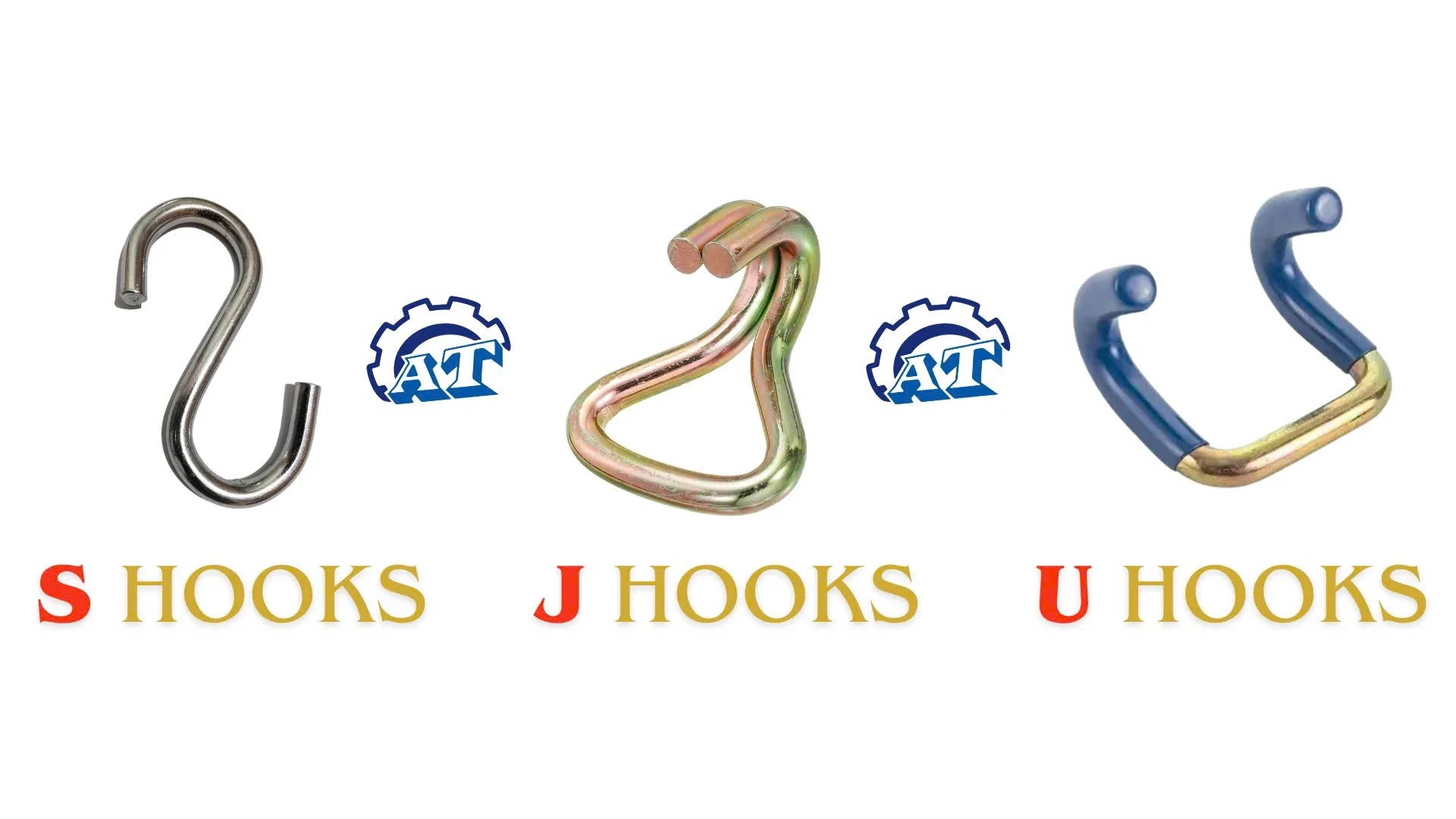
Detailed Comparison of J Hooks, U Hooks, and S Hooks
3. Advantages and Disadvantages of Each Hook Type
To make an accurate selection that meets specific application requirements, it is important to understand the advantages and limitations of each hook type.
3.1. Advantages and Disadvantages of J Hooks
Advantages:
- Simple design and easy identification.
- Convenient for connecting to compatible anchor points.
- Available in various sizes (25 mm, 38 mm, 50 mm, 75 mm, etc.) to meet different requirements.
- Commonly used in cargo lashing strap systems.
Limitations:
- Only suitable for anchor points with compatible dimensions and shapes.
- May become disengaged if the attachment point is incompatible or the hook is not properly secured.
- The product's load-bearing capacity and loading direction must be carefully checked.
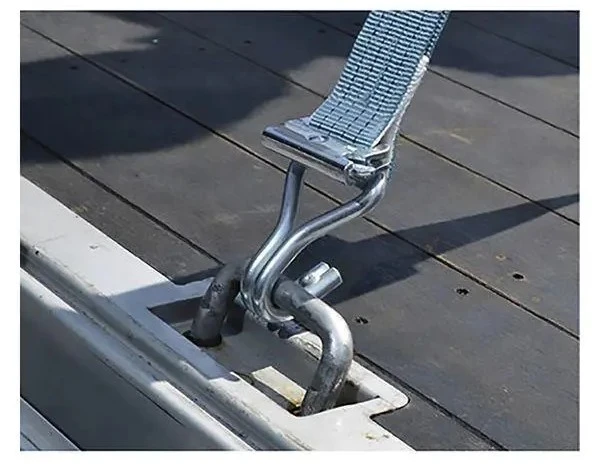
Practical Applications of J Hooks
3.2. Advantages and Disadvantages of U Hooks
Advantages:
- The two-arm design creates a dedicated space for connection.
- Available in various structural configurations.
- Can accommodate a wide range of holding and connecting applications.
Limitations:
- The appropriate U hook design must be selected based on the intended application.
- Not all designs are equipped with a locking mechanism to prevent accidental disengagement.
- Technical specifications must be carefully checked before using the product in load-bearing applications.
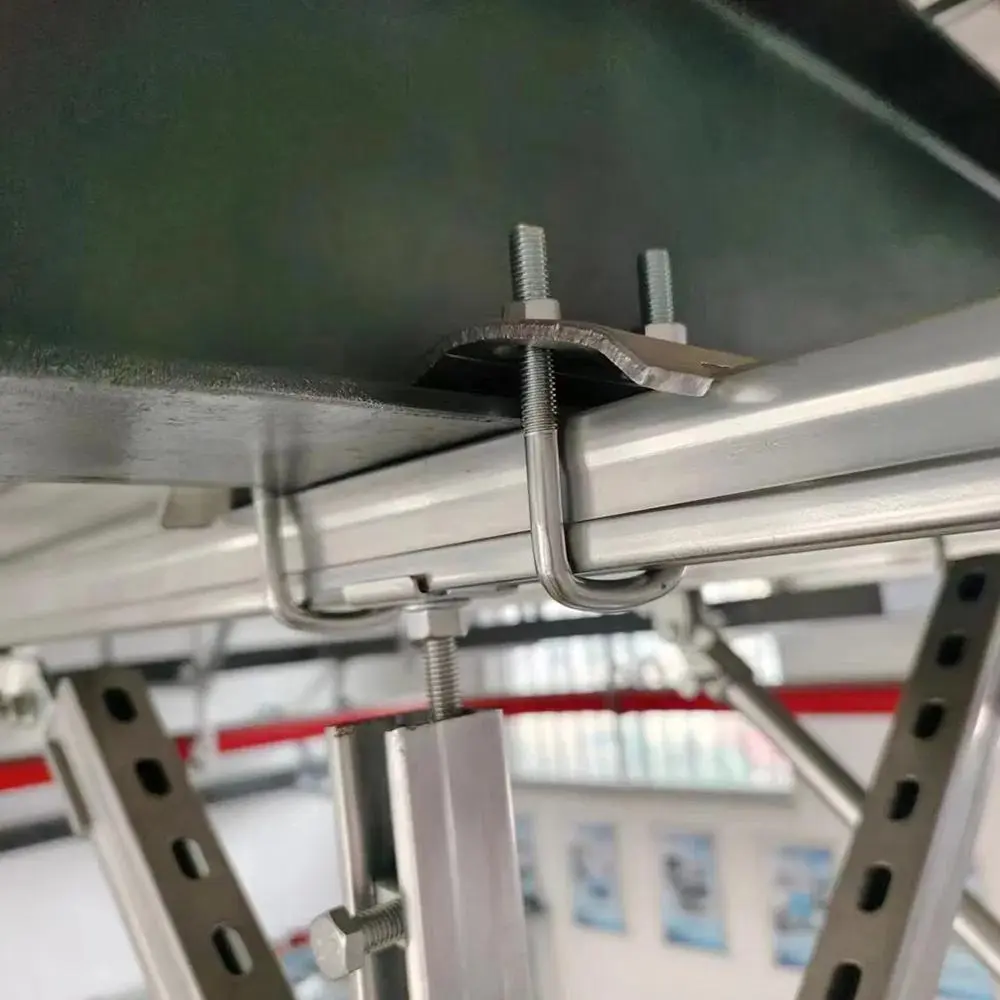
Practical Applications of U Hooks
3.3. Advantages and Disadvantages of S Hooks
Advantages:
- Simple and straightforward design.
- The two hooked ends allow connections between two separate attachment points.
- Easy to handle and operate in suitable applications.
- Available in various sizes and materials, including steel, carbon steel, plastic, and other materials.
Limitations:
- Both hooked ends may become disengaged if appropriate securing measures are not in place.
- Not all S hooks are suitable for securing heavy loads in cargo lashing applications.
- The risk of deformation under loads exceeding the design limits must be carefully considered.
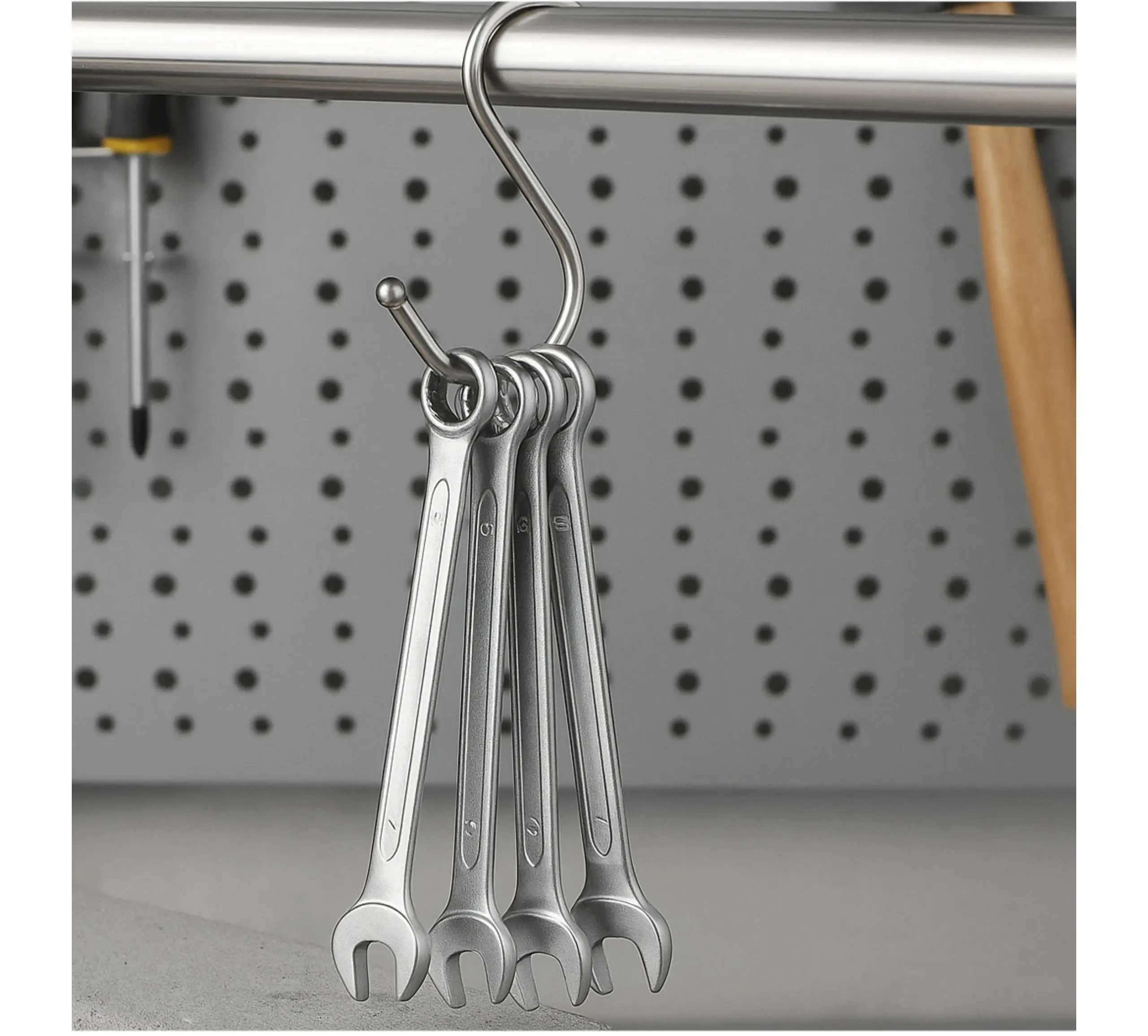
Practical Applications of S Hooks
4. Important Considerations When Choosing J Hooks, U Hooks, and S Hooks
To ensure effective use and minimize potential risks, users should consider several important factors when selecting hooks.
4.1. Identify the Intended Application
First, determine whether the hook will be used for hanging objects, connecting accessories, securing cargo, or lifting applications.
One type of hook should not be used for every application.
4.2. Check the Material of the Product
The material directly affects the durability and performance of a hook.
Commonly used materials include:
- Carbon Steel: Widely used in various metal hardware products.
- Alloy Steel: Suitable for products requiring enhanced mechanical properties.
- Stainless Steel: Suitable for certain environments where corrosion resistance is required.
Users should also consider the surface coating, operating environment, and any additional corrosion protection treatments applied to the product.
4.3. Pay Attention to the Safe Working Load (SWL)
For accessories used in cargo lashing or lifting applications, it is essential to check the Safe Working Load (SWL) specified by the manufacturer.
In particular, users must distinguish between Safe Working Load (SWL) and Breaking Load (BL).
*Never select a product based solely on its dimensions or apparent thickness.
4.4. Inspect the Product Before Use
Before each use, carefully inspect the hook for the following:
- Cracks or deformation on the hook body.
- Signs of corrosion or wear.
- Any abnormal opening or widening of the hook's throat.
- Damage to connection points or attachment areas.
- Whether the product markings and identification information remain clearly visible.
If any signs of damage are detected, discontinue use immediately and replace the product.
5. Should You Choose J Hooks, U Hooks, or S Hooks?
Choosing between J Hooks, U Hooks, and S Hooks depends on the intended application, type of lashing strap, anchor point configuration, and required working load. Each hook type features a distinct design suited to different connection methods. Therefore, selection should not be based solely on external shape or dimensions.
5.1. Based on the Intended Application
First, determine whether the hook will be used for securing cargo, hanging objects, or connecting different accessories.
Choose J Hooks: You need to connect cargo lashing straps to compatible anchor points, such as anchor lugs, anchor rings, or designated securing points on transport vehicles. The J-shaped design allows relatively convenient attachment and detachment.
Choose U Hooks: You need a connection design with two arms that can wrap around or engage with compatible anchor points or structures. However, you should carefully check the specific U hook design, throat opening, and load distribution before use.
Choose S Hooks: You need to establish quick connections between two compatible attachment points, such as hanging, linking, or securing certain accessories. The two oppositely curved ends provide flexibility in suitable applications.
5.2. Based on the Type of Cargo Lashing Strap
The hook is a direct connection component of a cargo lashing strap. Therefore, its dimensions and design must be compatible with the strap end fitting.
Several factors should be checked:
- Strap Width: The width of the hook's strap-receiving section or attachment fitting must be compatible with the lashing strap width to prevent folding, twisting, or edge damage.
- Strap End Configuration: Determine whether the strap uses a sewn loop, eye fitting, connecting buckle, or another attachment design to select a compatible hook.
- Hook Dimensions: The throat opening, body diameter, and internal clearance must be suitable for the actual connection point.
- Load-Bearing Capacity: The Safe Working Load (SWL) of the hook and all related accessories must meet the requirements of the cargo lashing system.
For example, when using a 50 mm-wide ratchet tie-down strap, you should not select a hook based solely on the 50 mm dimension. The strap end configuration, receiving dimensions, and technical specifications of the hook assembly must also be checked.
5.3. Based on the Anchor Point Configuration
The anchor point is a critical factor in determining whether a particular hook can be used safely.
Ring-shaped or eye-type anchor points: J Hooks or U Hooks may be considered if their shapes, dimensions, and loading directions are compatible with the anchor points.
Anchor points with limited access space: Check the hook throat opening and ease of attachment. Avoid forcing oversized or incompatible hooks into the connection point.
Connection points requiring frequent attachment and detachment: S Hooks may provide a convenient solution if both hooked ends remain properly engaged and there is no risk of accidental disengagement during use.
Anchor points exposed to vibration or changing pulling directions: Hooks with a secure locking mechanism, such as safety-latch hooks, should be prioritized over open hooks when there is a risk of accidental disengagement.
*Note: Do not use hooks in twisted conditions, under eccentric loading, or against sharp edges unless the product design specifically permits such conditions.
6. Frequently Asked Questions About J Hooks, U Hooks, and S Hooks
What Is the Difference Between J Hooks, U Hooks, and S Hooks?
The main differences lie in their shapes and structural designs. J Hooks feature a single curved end resembling the letter J, U Hooks have two curved arms forming a U shape, while S Hooks feature two oppositely curved ends. Each type is suitable for different connection methods and applications.
Which Is Better: J Hooks or S Hooks?
There is no definitive answer, as the choice depends on the intended application. J Hooks are suitable for compatible anchor points in cargo lashing systems, while S Hooks offer convenient connections between two attachment points in suitable applications. The design and load ratings of each product should be carefully considered before making a selection.
Do U Hooks Have a Higher Load Capacity Than J Hooks?
It cannot be assumed that U Hooks always have a higher load capacity than J Hooks. Load-bearing capacity depends on the material, dimensions, structural design, manufacturing process, and direction of the applied force. Users should refer to the Safe Working Load (SWL) specified by the manufacturer.
Can S Hooks Be Used for Cargo Lashing?
Yes, S Hooks can be used in certain cargo lashing applications, provided their design and load ratings are suitable. However, the risk of accidental disengagement must be assessed, and an appropriate connection mechanism should be selected, especially when securing heavy loads during transportation.
What Factors Should Be Considered When Choosing Cargo Lashing Hooks?
Important factors include hook shape, dimensions, material, Safe Working Load (SWL), anchor point compatibility, and operating conditions. In addition, users should verify product quality and technical information provided by the supplier.
7. Where to Buy Quality J Hooks, U Hooks, and S Hooks
Choosing a reliable supplier plays an important role in ensuring product quality and effective performance of metal hardware accessories.
A professional supplier should meet several key criteria, including:
- Products with clear origins and traceable information.
- A wide range of sizes and hook types.
- Accurate and detailed technical specifications.
- Professional consultation based on specific application requirements.
- Warranty policies and customer support when needed.
If you are looking for J Hooks, U Hooks, or S Hooks for cargo lashing and industrial applications, prioritize products with the correct specifications and suitable load ratings.
Contact An Thanh for expert advice on selecting the right hook type, obtaining product information, and receiving a quotation based on your specific requirements.
8. Conclusion
J Hooks, U Hooks, and S Hooks all play important roles in connecting, hanging, and securing cargo. Each type has its own structural characteristics and application range. To select the right product, users should consider the intended application, required load capacity, material, and actual technical specifications.
J Hooks are suitable for compatible anchor points, U Hooks accommodate connection requirements through their two-arm design, while S Hooks offer convenient connections between two separate attachment points.
We hope this article has helped you better understand the differences between these three hook types and choose the most suitable product for your application.
Related News

25/11
2026
For stainless steel laser cutting, send a 1:1 scale DXF file for machine programming along with a dimensioned PDF to prevent cutting errors. Review the DXF, DWG, and PDF comparison chart, 3 shop-ready file export rules, and 5 common CAD mistakes to avoid.

17/11
2026
In laser metal cutting, product accuracy depends not only on machine power and cutting speed but also on various other technical parameters. One of the key factors that is often discussed is Kerf Width, which refers to the width of the cut produced by the laser.
What is kerf width? Why does it affect machining quality? And how can this parameter be controlled to minimize dimensional deviations and optimize production efficiency? Let's explore these questions in the following article.

14/11
2026
Mechanical engineering manufacturing is one of the fundamental engineering disciplines driving the development of modern industry. Almost every product and piece of equipment used in manufacturing, from industrial machinery and automotive components to agricultural equipment and everyday consumer goods, relies on mechanical manufacturing technologies at some stage of its production.

09/11
2026
Knowing how to clean and store tie-down straps properly prevents webbing wear, stops ratchet rust, and ensures safe cargo transport. Follow these 3 simple steps to wash, dry, and store your straps for maximum longevity.
View more