

How to Clean and Store Tie-Down Straps for Safety and Longevity
- 1. Why Proper Cargo Tie-Down Strap Maintenance Matters?
- 2. How to Clean and Store Cargo Tie-Down Straps (3-Step Guide)
- 2.1. Clean the Cargo Tie-Down Straps After Use
- 2.2. Dry the Straps Before Storage
- 2.3. Store in a Dry, Well-Ventilated Place
- 3. Specific Maintenance Tips by Tie-Down Strap Type
- 4. Warning Signs Your Cargo Straps Need Immediate Replacement
- 5. Where to Buy High-Quality, Certified Cargo Tie-Down Straps?
Knowing how to clean and store tie-down straps properly prevents webbing wear, stops ratchet rust, and ensures safe cargo transport. Follow these 3 simple steps to wash, dry, and store your straps for maximum longevity.
1. Why Proper Cargo Tie-Down Strap Maintenance Matters?
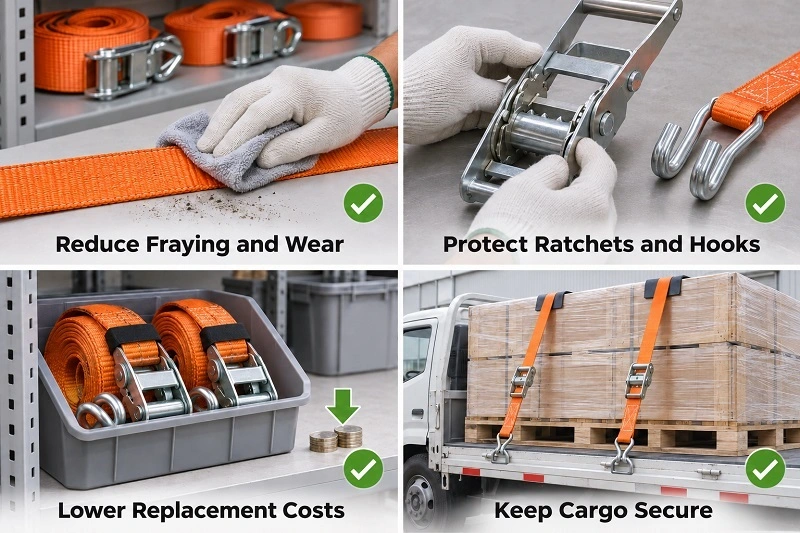
Because cargo tie-down straps constantly endure heavy tension, friction, and harsh weather, improper care quickly leads to premature wear and reduced load capacity. Routine cleaning and proper storage provide four key benefits:
-
Prevent webbing fraying and degradation: Protects strap fibers from abrasive dirt, moisture, and UV sunlight.
-
Protect metal hardware: Prevents rust, jamming, and deformation in hooks, buckles, and ratchet mechanisms.
-
Lower replacement costs: Extends the service life of both webbing and accessories, reducing frequent repurchases.
-
Ensure safe cargo transport: Maintains reliable tension to prevent strap failure and stop cargo from shifting in transit.
2. How to Clean and Store Cargo Tie-Down Straps (3-Step Guide)
To maintain maximum durability and prevent premature wear, always clean, dry, and store your cargo straps and hardware properly after every haul.
2.1. Clean the Cargo Tie-Down Straps After Use
Trapped dirt, sand, and grit increase friction under load and abrade the strap surface. Clean and inspect your straps immediately after each trip:
-
Remove surface debris: Wipe the webbing with a soft cloth or rinse with clean water. For stubborn stains, apply a material-safe cleaning method following the manufacturer's instructions.
-
Inspect key components: Check the stitching, hooks, buckles, and ratchet mechanism to catch early signs of wear or damage.
2.2. Dry the Straps Before Storage
Residual moisture degrades webbing fibers and corrodes metal parts, so ensure straps are completely dry before putting them away:
-
Air-dry naturally: Lay the straps flat in a clean, well-ventilated area. Never coil damp straps.
-
Avoid high heat: Do not use direct heat sources to speed up drying, as excessive temperatures can damage the strap material.
-
Dry metal crevices: Wipe away water trapped inside the ratchet mechanism and metal hooks to prevent rust and corrosion.
2.3. Store in a Dry, Well-Ventilated Place
Proper storage conditions protect cargo tie-down straps from environmental damage between uses:
-
Keep organized and elevated: Place coiled straps on shelves or in dedicated storage boxes - never directly on the floor or in damp areas.
-
Shield from UV and heat: Keep straps out of intense direct sunlight, as prolonged UV exposure and high temperatures weaken webbing materials.
Note: Avoid direct contact between the straps and harsh chemicals or sharp metal objects.
3. Specific Maintenance Tips by Tie-Down Strap Type
In general, each type of cargo tie-down strap has a different structure and operating mechanism, so it requires an appropriate maintenance method. In addition to cleaning and drying the straps after use, pay attention to the condition of the locking mechanism, connecting hooks, and strap integrity to prevent damage during use and storage.
3.1. Ratchet Tie-Down Straps
A ratchet tie-down strap consists of webbing, a ratchet mechanism, and metal connecting hooks. Therefore, maintenance should cover both the textile webbing and the ratchet mechanism to ensure that the product continues to function properly.
-
Clean the webbing: Remove dirt, sand, and other contaminants from the strap surface using a soft cloth or a cleaning method recommended by the manufacturer.
-
Inspect the ratchet mechanism: Check the handle, gear, winding spindle, and locking pawl for signs of rust, bending, deformation, or improper operation.
-
Dry before storage: If the straps become wet during use or cleaning, allow both the webbing and metal components to air-dry naturally before storage.
-
Coil the straps neatly: Coil the webbing naturally and neatly. Avoid twisting or knotting the straps, or allowing them to become caught in the ratchet components.
-
Store in a suitable place: Place the straps in a clean, dry storage bag or box. Keep them away from direct sunlight and environments containing corrosive chemicals.
See also: How to Use a Ratchet Buckle Safely: A Step-by-Step Guide
3.2. Cam Buckle Tie-Down Straps
Cam buckle tie-down straps use a spring-loaded locking mechanism and gripping teeth to hold the webbing securely in place. Therefore, in addition to maintaining the webbing, ensure that the cam buckle remains free of dirt, does not jam, and retains its ability to grip the strap.
-
Clean the cam buckle: Use a soft cloth to wipe dirt from the buckle body, spring, and areas in contact with the webbing. Clean water or a mild cleaning solution may be used if permitted by the manufacturer's instructions.
-
Check the opening and closing operation: Inspect the spring and clamping mechanism to ensure that the buckle opens and closes normally without jamming or deformation.
-
Clean the webbing: Remove sand, dust, and other contaminants that may abrade the textile fibers. Avoid strong detergents, as they may damage the strap material.
-
Dry completely: After cleaning, lay the straps in a well-ventilated area and allow them to air-dry naturally. Do not store them while damp, as moisture may affect both the webbing and metal components.
See also: Cam Buckle Strap Maintenance: Care Guide
4. Warning Signs Your Cargo Straps Need Immediate Replacement
There is no doubt that cleaning and maintaining cargo tie-down straps after use is important. It extends their service life and helps keep them in good working condition. However, over time, external forces, material fatigue, and mechanical wear can cause deterioration. You should therefore inspect the straps periodically and replace them when necessary to ensure reliable and safe operation.
The following "warning signs" indicate that a cargo tie-down strap should be replaced:
+ The cargo is broken, has frayed stitching, or is severely worn or torn
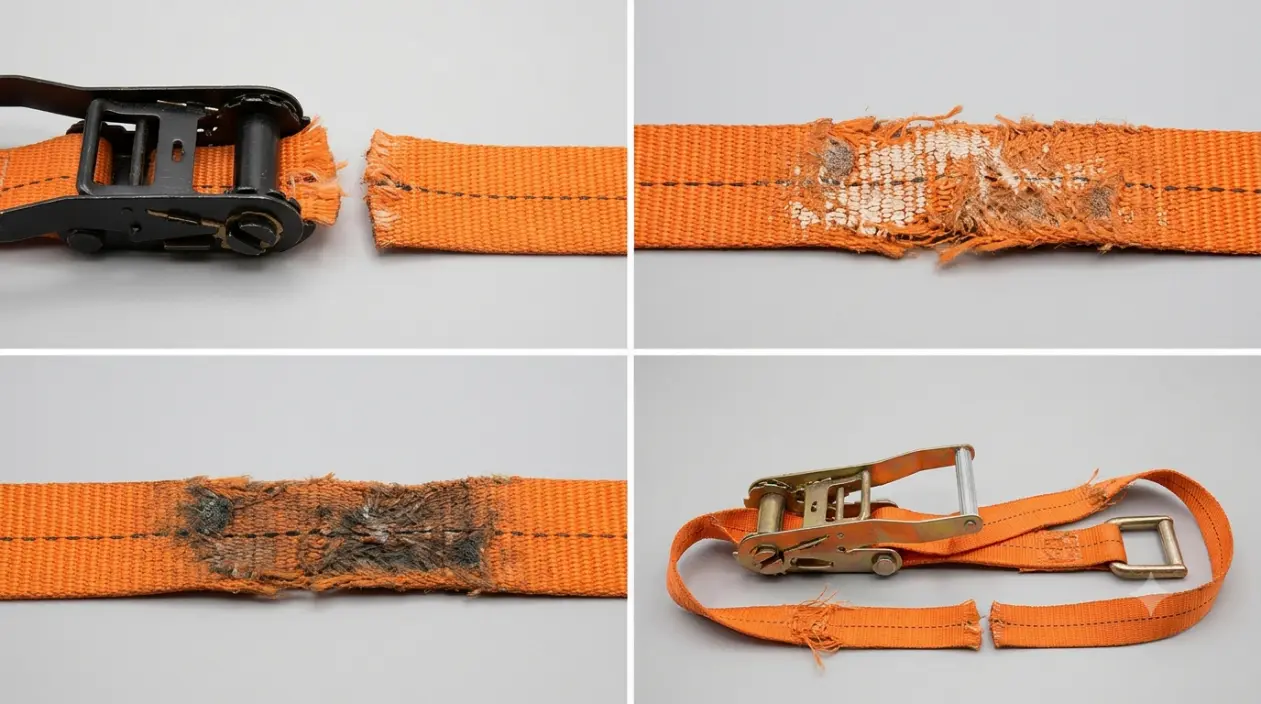
The cargo is broken, has frayed stitching, or is severely worn or torn
+ The strap structure is damaged or becomes brittle after exposure to sunlight during use
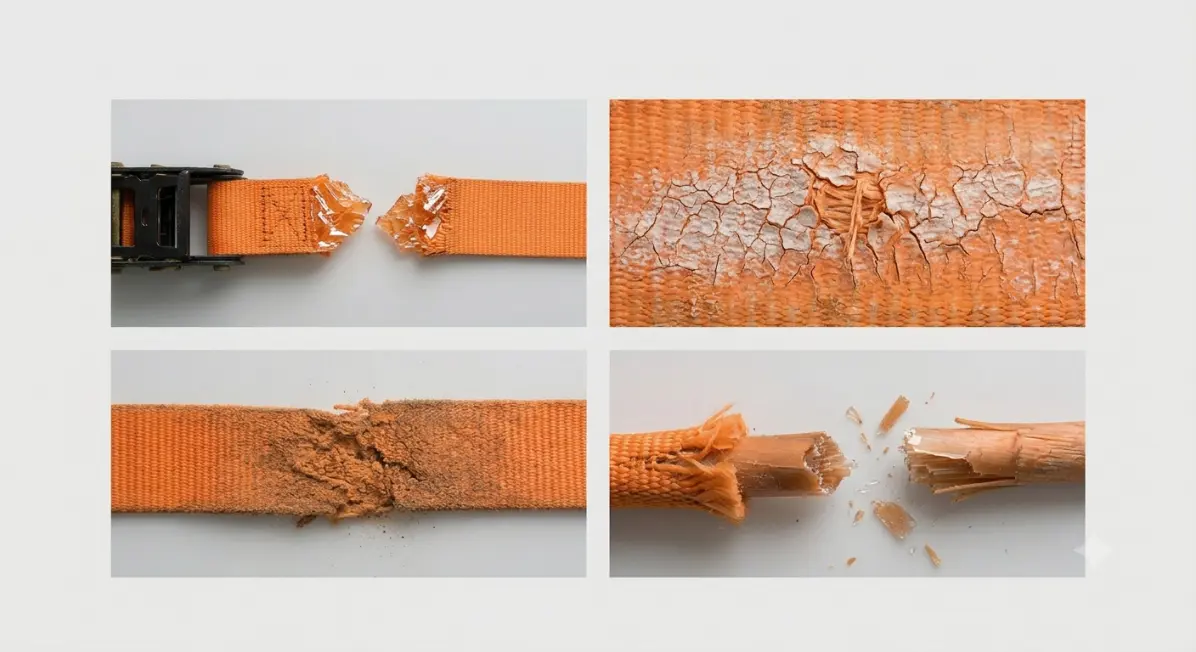
The strap structure is damaged or becomes brittle after exposure to sunlight during use
+ The ratchet mechanism is deformed, dented, or rusted
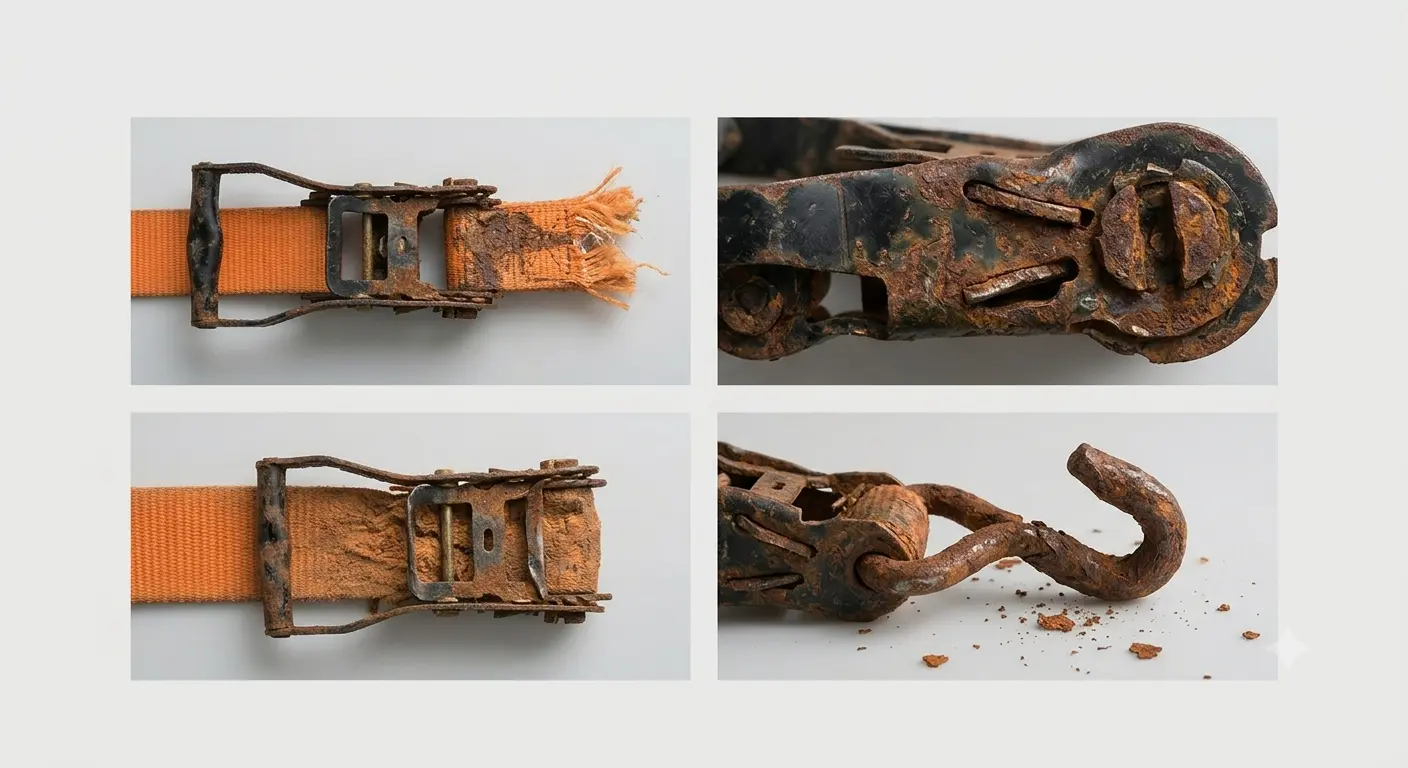
The ratchet mechanism is deformed, dented, or rusted
5. Where to Buy High-Quality, Certified Cargo Tie-Down Straps?
To ensure that goods are securely fastened during transportation, it is essential to choose a reputable supplier of cargo tie-down straps. A quality product must not only meet the required load capacity but also have a clear origin, durable materials, and specifications suited to its intended application.
If you are looking for a reliable supplier of high-quality cargo tie-down straps, An Thanh is a supplier worth considering. With a focus on providing technical solutions and equipment to support cargo transportation, An Thanh aims to offer products that meet customers' practical needs.
Related News

07/11
2026
Think all industrial greys look the same? Place RAL 7032 (Pebble Grey) next to RAL 7035 (Light Grey), and the contrast between warm beige-grey and bright silver-grey is unmistakable. Explore their exact color codes, powder coating specs, and ideal applications below to choose the right finish.

15/10
2026
Match a ratchet buckle, webbing, and hooks across four criteria: webbing width, complete-assembly load rating (WLL/LC), operating environment, and anchor-point geometry. Pair the buckle to the webbing’s exact width and thickness, rate the assembly by its weakest link, and ensure hooks seat fully without tip loading.

15/10
2026
Understanding ratchet buckle load ratings is essential for safe cargo securement. This guide explains the difference between WLL (Working Load Limit), LC (Lashing Capacity) and breaking strength, shows how to read a ratchet strap label, and helps buyers select the correct ratchet buckle assembly for US, EU and Australian transport applications.

01/11
2026
Dirt, moisture and worn parts can reduce a cam buckle’s grip. In this guide, An Thanh Tech, a cargo securing hardware manufacturer in Ho Chi Minh City, Vietnam, shares practical cam buckle strap maintenance tips, from cleaning and inspection to storage and replacement.
View more