

What Is Mechanical Manufacturing? Its Role, Importance, and Current Career Opportunities
- 1. What Is Mechanical Engineering Manufacturing?
- 1.1. Definition of Mechanical Engineering Manufacturing
- 1.2. Key Characteristics of the Mechanical Engineering Manufacturing Industry
- 1.3. The Importance of the Mechanical Engineering Manufacturing Industry
- 2. Salary Expectations in the Mechanical Engineering Manufacturing Industry
- 3. Career Development Opportunities and Industry Outlook
- 4. Frequently Asked Questions About Mechanical Manufacturing (FAQs)
- 5. Conclusion
Mechanical engineering manufacturing is one of the fundamental engineering disciplines driving the development of modern industry. Almost every product and piece of equipment used in manufacturing, from industrial machinery and automotive components to agricultural equipment and everyday consumer goods, relies on mechanical manufacturing technologies at some stage of its production.
1. What Is Mechanical Engineering Manufacturing?
1.1. Definition of Mechanical Engineering Manufacturing
Mechanical Engineering Manufacturing is a specialized field within mechanical engineering that focuses on the study and application of scientific principles, mechanics, materials engineering, and manufacturing technologies to transform raw materials into machine components, mechanical parts, and finished products through various manufacturing processes.
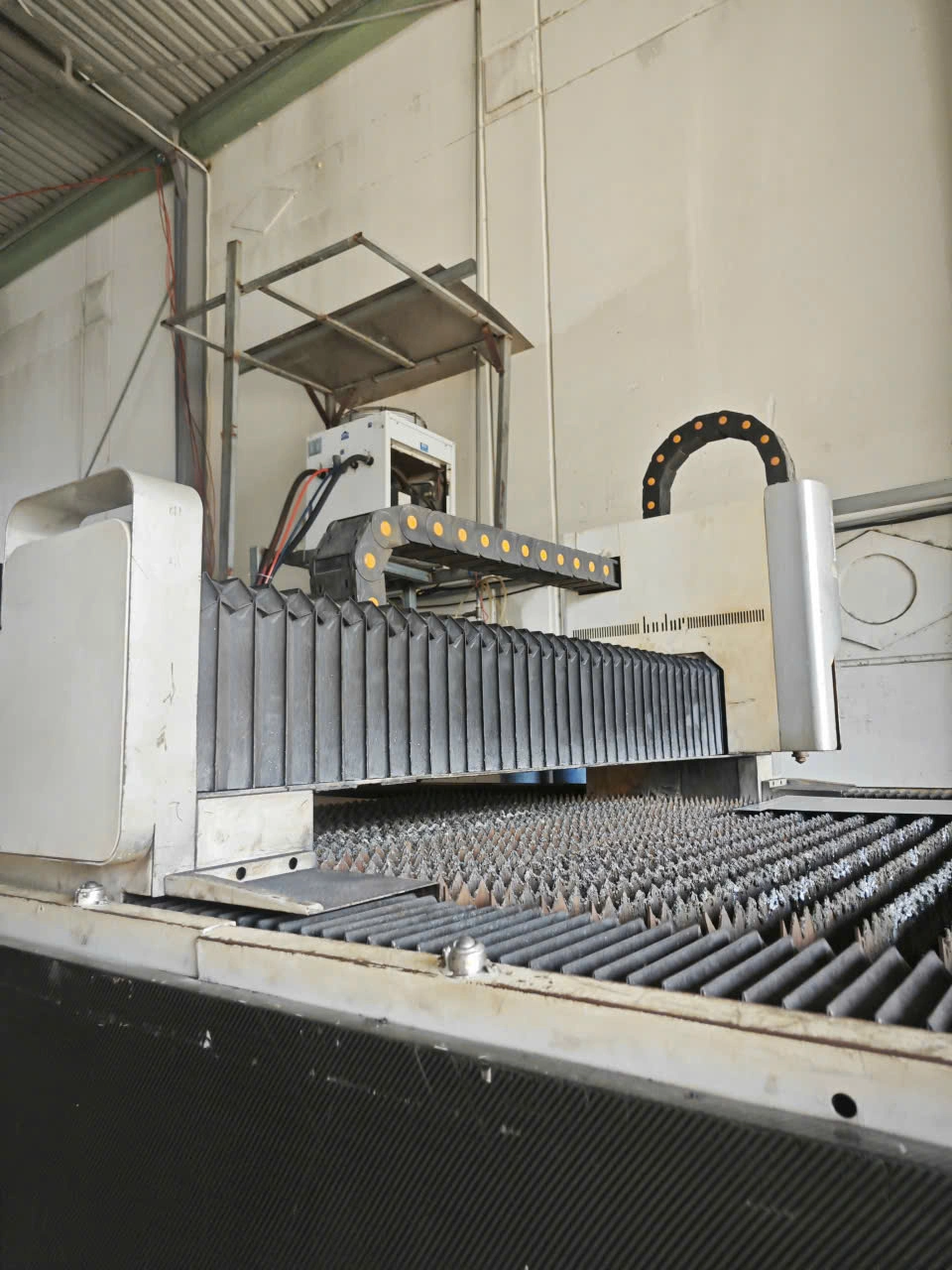
What Is Mechanical Manufacturing?
1.2. Key Characteristics of the Mechanical Engineering Manufacturing Industry
The mechanical engineering manufacturing industry has several distinctive characteristics, requiring a combination of technical knowledge, practical skills, and the ability to apply modern technologies.
Some of its key characteristics include:
- High technical requirements: Manufacturing processes require a solid understanding of mechanics, materials, dimensional tolerances, surface roughness, and technical specifications.
- High precision: Products must meet strict requirements for dimensions, geometry, concentricity, flatness, and assembly compatibility.
- A wide range of manufacturing technologies: Various methods can be employed, including conventional machining, CNC machining, welding, casting, stamping, and metal 3D printing.
- Broad industrial applications: Mechanical products are used across a wide range of industries and everyday applications.
1.3. The Importance of the Mechanical Engineering Manufacturing Industry
Mechanical engineering manufacturing is widely regarded as the backbone of industrial development. It plays a fundamental role in producing machinery, equipment, components, and systems that support manufacturing operations across nearly every sector of the economy.
From automotive manufacturing, electronics, energy, and construction to agriculture and transportation, industries rely on the products and solutions provided by the mechanical manufacturing sector.
Several factors make this industry a cornerstone of economic and industrial development:
- Supplying machinery and equipment to support manufacturing operations.
- Providing the foundation for producing industrial components and spare parts.
- Supporting the growth and development of various economic sectors.
- Creating employment opportunities and fostering a highly skilled workforce.
2. Salary Expectations in the Mechanical Engineering Manufacturing Industry
Salaries in this industry are influenced by several factors, including professional experience, job position, geographical location, and company size.
The following table provides an estimated salary range based on years of work experience:
|
Work Experience |
Low Salary |
Average Salary |
High Salary |
|
Less than 1 year |
VND 10.3 million |
VND 14 million |
VND 18 million |
|
1–3 years |
VND 12.5 million |
VND 16 million |
VND 20 million |
|
More than 3 years |
VND 14.9 million |
VND 18 million |
VND 23 million |
Source: JobsGo's 2026 published average salary report by job position.
Note: These figures are estimates provided for reference purposes only. Actual earnings may vary significantly depending on the employer, location, work shifts, allowances, overtime, and individual capabilities.
Professionals with expertise in CNC programming, CAD/CAM design, engineering software, and manufacturing problem-solving are generally better positioned to pursue specialized and higher-level technical roles.
3. Career Development Opportunities and Industry Outlook
As discussed in Section 1.3, mechanical engineering manufacturing serves as a foundation for numerous other industrial sectors. Consequently, the industry offers promising career development opportunities, driven in large part by ongoing advances in manufacturing technologies.
Some notable industry trends include:
- Manufacturing automation: Industrial robots and automated control systems are becoming increasingly widespread across manufacturing facilities.
- CNC machining: Demand for professionals skilled in CNC machine operation, programming, and optimization continues to make this an important career path.
- CAD/CAM technology: Computer-aided design and manufacturing software enables engineers to design and manufacture products with increasingly complex geometries.
- Precision machining: Industries such as automotive manufacturing, electronics, industrial equipment, and medical devices impose increasingly stringent requirements for product quality and precision.
4. Frequently Asked Questions About Mechanical Manufacturing (FAQs)
- Is Mechanical Engineering Manufacturing Difficult?
Mechanical manufacturing involves several subjects that require strong technical and analytical thinking, including mechanics, mathematics, materials science, dimensional tolerances, and machining technologies.
However, the level of difficulty depends on the educational program, learning approach, and practical experience of each individual.
With a genuine interest in machinery, consistent practice, and a willingness to learn, you can gradually develop the knowledge and skills needed to build a successful career in this field.
- Do You Need to Be Good at Mathematics and Physics to Study Mechanical Engineering Manufacturing?
Mathematics and physics are important foundations for studying mechanical engineering manufacturing, particularly when dealing with engineering calculations and understanding structural properties, dimensional tolerances, mechanics, and machine design.
However, you do not necessarily need to excel in these subjects from the beginning.
Of course, having a strong background in mathematics and physics can be a significant advantage when pursuing a career in it. If these are not your strongest subjects, the key is to master the fundamentals and learn how to apply them to practical engineering problems.
- Does Mechanical Engineering Manufacturing Offer Good Career Prospects?
Mechanical Engineering manufacturing continues to play a vital role in industrial production. Growing demand for machinery, components, equipment, and automation solutions creates numerous career opportunities within this field.
In particular, professionals specializing in CNC machining, CAD/CAM, machine design, industrial robotics, and smart manufacturing can access a broader range of career opportunities in today's modern industrial environment.
5. Conclusion
As discussed throughout this article, mechanical engineering manufacturing is far more than simply a metalworking process. It is a multidisciplinary engineering field that integrates design, materials science, manufacturing technologies, machinery, and quality control.
From manufacturing industrial machinery and precision-machined components to producing equipment for everyday applications, the mechanical manufacturing industry makes a significant contribution to the development and modernization of industrial production.
Whether you are exploring career opportunities or already working in the mechanical engineering sector, staying up to date with industry knowledge, selecting the right machinery, and equipping yourself with appropriate specialized mechanical tools are essential steps.
These factors help improve machining efficiency, ensure product quality, and support long-term professional growth.
Related News

09/11
2026
Knowing how to clean and store tie-down straps properly prevents webbing wear, stops ratchet rust, and ensures safe cargo transport. Follow these 3 simple steps to wash, dry, and store your straps for maximum longevity.

07/11
2026
Think all industrial greys look the same? Place RAL 7032 (Pebble Grey) next to RAL 7035 (Light Grey), and the contrast between warm beige-grey and bright silver-grey is unmistakable. Explore their exact color codes, powder coating specs, and ideal applications below to choose the right finish.

15/10
2026
Match a ratchet buckle, webbing, and hooks across four criteria: webbing width, complete-assembly load rating (WLL/LC), operating environment, and anchor-point geometry. Pair the buckle to the webbing’s exact width and thickness, rate the assembly by its weakest link, and ensure hooks seat fully without tip loading.

15/10
2026
Understanding ratchet buckle load ratings is essential for safe cargo securement. This guide explains the difference between WLL (Working Load Limit), LC (Lashing Capacity) and breaking strength, shows how to read a ratchet strap label, and helps buyers select the correct ratchet buckle assembly for US, EU and Australian transport applications.
View more