

RAL 7032 vs RAL 7035: Key Differences in Powder Coating
- What Is the Difference Between RAL 7032 and RAL 7035?
- RAL 7032 vs. RAL 7035 Color Comparison Chart (HEX, RGB, LRV)
- Technical Specifications for RAL 7032 and RAL 7035 Powder Coating
- Epoxy-Polyester vs. Pure Polyester Resin Systems
- Powder Coating Surface Textures and Film Thickness
- Curing Schedule & Durability Standards
- Industrial Applications: When to Use RAL 7032 vs. RAL 7035
- How to Choose Between RAL 7032 and RAL 7035 for Your Project
Think all industrial greys look the same? Place RAL 7032 (Pebble Grey) next to RAL 7035 (Light Grey), and the contrast between warm beige-grey and bright silver-grey is unmistakable. Explore their exact color codes, powder coating specs, and ideal applications below to choose the right finish.
In industrial manufacturing, sheet metal fabrication, and electrical enclosure production, choosing between RAL 7032 and RAL 7035 powder coating goes far beyond aesthetics. The coating color directly affects thermal performance, workspace visibility, maintenance frequency, and long-term weather resistance.
Within the RAL Classic standard, RAL 7032 (Pebble Grey) and RAL 7035 (Light Grey) are the two most widely specified industrial greys worldwide. Drawing on practical manufacturing expertise, An Thanh Tech breaks down their color specifications, chemical properties, surface textures, and optimal applications to help you specify the ideal finish for your project.
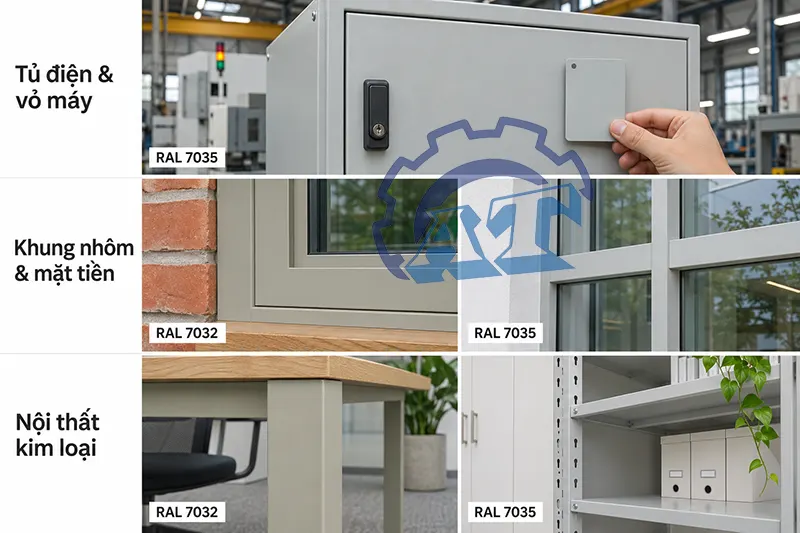
Key Differences Between RAL 7032 and RAL 7035
What Is the Difference Between RAL 7032 and RAL 7035?
Although both colors belong to the RAL 7000 grey series, side-by-side inspection reveals a CIE color difference (ΔE\Delta EΔE) of approximately 8.35, making them easily distinguishable to the naked eye.
What Color Is RAL 7032 (Pebble Grey)?
RAL 7032 is a medium-light, warm grey featuring a distinct beige, earthy, or yellowish-brown undertone that resembles natural river pebbles.
-
Visual Character: Warm, muted, and rugged.
-
Light Reflectance Value (LRV): Approximately 43% - 45%.
-
Key Advantage: Its earthy pigment naturally conceals airborne dust, yellow clay, oil smudges, and minor surface oxidation, making it ideal for heavy-duty industrial settings.
What Color Is RAL 7035 (Light Grey)?
RAL 7035 is a crisp, cool-to-neutral light grey with a subtle silver-white undertone. It is the current global standard for modern indoor electrical and automation enclosures.
-
Visual Character: Clean, bright, and contemporary.
-
Light Reflectance Value (LRV): Approximately 58%.
-
Key Advantage: High luminance brightens factory floors, server rooms, and control centers while reducing solar heat absorption in sunlit locations.
RAL 7032 vs. RAL 7035 Color Comparison Chart (HEX, RGB, LRV)
| Specification / Criterion | RAL 7032 (Pebble Grey) | RAL 7035 (Light Grey) |
|---|---|---|
| Official RAL Classic Name | Pebble Grey | Light Grey |
| Color Undertone | Warm grey with beige / earthy brown tint | Cool, crisp grey with silver-white tint |
| Color Saturation | Higher saturation (deeper pigment) | Lower saturation (closer to neutral white-grey) |
| Light Reflectance Value (LRV) | ~43% – 45% (Medium reflectance) | ~58% (High reflectance) |
| HEX Code (Digital Approx.) | #B5B0A1 |
#C5C7C4 |
| RGB Values | R: 181, G: 176, B: 161 |
R: 197, G: 199, B: 196 |
| CMYK Values | C: 0%, M: 3%, Y: 11%, K: 29% |
C: 1%, M: 0%, Y: 2%, K: 22% |
| Dirt & Stain Concealment | Excellent – hides dust, grease, and yellowing | Moderate – dark smudges show more easily |
| Solar Heat Absorption | Slightly higher due to darker tone | Lower – reflects more solar radiation |
| Primary Industry Trend | Traditional heavy-duty standard | Modern standard for automation & IT |
(Note: Digital HEX and RGB codes are screen approximations. Always verify against a physical RAL K5 or K7 color fan deck before production.)
Technical Specifications for RAL 7032 and RAL 7035 Powder Coating
Selecting the color code is only half the specification. Engineers must also pair RAL 7032 or RAL 7035 with the right resin chemistry and surface texture for the operating environment.
Epoxy-Polyester vs. Pure Polyester Resin Systems
- Epoxy-Polyester Hybrid Powder Coating (Indoor Use):
-
Combines the mechanical toughness of epoxy with the yellowing resistance of polyester.
-
Best for: Indoor switchboards, distribution panels, warehouse racking, and office lockers (predominantly specified in RAL 7035).
-
- Pure Polyester Powder Coating (Outdoor & UV-Resistant):
- Formulated to resist prolonged UV radiation, humidity, and extreme weather without chalking or fading.
- Best for: Outdoor telecom cabinets, substation enclosures, solar inverters, and exterior cable trays (specified in RAL 7032 or UV-stabilized RAL 7035).
Powder Coating Surface Textures and Film Thickness
-
Smooth Finish (Gloss / Semi-Gloss / Matte):
60 – 90 μmfilm thickness. Easy to wipe clean; prevents dust buildup in cleanrooms and medical or food-processing facilities. -
Fine Structure / Sand Texture:
70 – 100 μmfilm thickness. Produces a matte micro-texture that reduces glare, improves grip, and hides minor sheet-metal fabrication marks. -
Wrinkle / Leatherette Texture:
80 – 120 μmfilm thickness. A classic heavy-duty finish for electrical panels that resists scratches and hides fingerprints.
Curing Schedule & Durability Standards
-
Substrate Pre-treatment: Zinc phosphating for steel; chromate or non-chromate conversion for aluminum.
-
Curing Schedule:
180°C – 200°C(metal temperature) for10 – 15 minutes. -
Corrosion Resistance:
>500 hoursin neutral salt spray testing (ISO 9227) and humidity testing (ISO 6270).
Industrial Applications: When to Use RAL 7032 vs. RAL 7035
Best Uses for RAL 7032 (Pebble Grey)
-
Outdoor Utility & Telecom Enclosures: Roadside traffic boxes, fiber-optic cabinets, and transformer housings exposed to rain, mud, and exhaust fumes.
-
Heavy Machinery & Factory Equipment: CNC frames, hydraulic power units, welding machines, and generators exposed to oil mist and metal dust.
-
Cable Management Systems: Heavy-duty cable trays, ladders, and trunking in steel mills, cement plants, or mining sites.
-
Legacy System Upgrades: Matching existing panels in older factories originally built under RAL 7032 standards.
Best Uses for RAL 7035 (Light Grey)
-
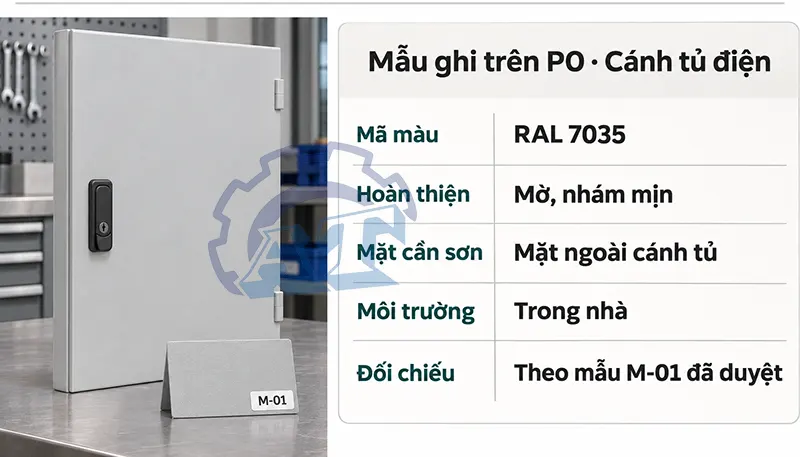
Electrical Enclosures & Switchgear (LV/MV Panels): Main distribution boards (MDB), PLC control cabinets, and motor control centers (MCC) in smart factories.
-
IT Infrastructure & Data Centers: Server racks, network patch panels, and UPS battery cabinets.
-
Cleanrooms, Laboratories & Healthcare: Medical carts, fume hoods, and pharmaceutical storage cabinets requiring strict visual cleanliness.
-
Logistics & Commercial Shelving: Automated storage systems, pallet racks, tool cabinets, and employee lockers.
How to Choose Between RAL 7032 and RAL 7035 for Your Project
-
Installation Environment: Choose RAL 7032 for dusty workshops, high-traffic zones, or outdoor locations where frequent cleaning is impractical. Choose RAL 7035 for clean, climate-controlled indoor facilities.
-
Lighting & Visibility: In compact electrical rooms or dimly lit corridors, RAL 7035 reflects ~15% more light than RAL 7032, improving visibility around indicators and labels.
-
Thermal Management: For outdoor cabinets housing heat-sensitive electronics (VFDs, telecom batteries) in hot climates, UV-resistant RAL 7035 reflects more sunlight and helps keep internal temperatures lower.
-
Visual Consistency: Always check the RAL code of adjacent equipment. Placing RAL 7032 and RAL 7035 cabinets side-by-side creates a noticeable mismatch, making the RAL 7032 enclosure appear aged next to the bright white-grey of RAL 7035.
Related News

15/10
2026
Match a ratchet buckle, webbing, and hooks across four criteria: webbing width, complete-assembly load rating (WLL/LC), operating environment, and anchor-point geometry. Pair the buckle to the webbing’s exact width and thickness, rate the assembly by its weakest link, and ensure hooks seat fully without tip loading.

15/10
2026
Understanding ratchet buckle load ratings is essential for safe cargo securement. This guide explains the difference between WLL (Working Load Limit), LC (Lashing Capacity) and breaking strength, shows how to read a ratchet strap label, and helps buyers select the correct ratchet buckle assembly for US, EU and Australian transport applications.

01/11
2026
Dirt, moisture and worn parts can reduce a cam buckle’s grip. In this guide, An Thanh Tech, a cargo securing hardware manufacturer in Ho Chi Minh City, Vietnam, shares practical cam buckle strap maintenance tips, from cleaning and inspection to storage and replacement.

01/11
2026
Ratchet strap slipping or jamming? Learn how to thread, tighten and release a ratchet buckle correctly with practical safety guidance from An Thanh Tech, a cargo securing hardware manufacturer in Vietnam.
View more